The Ultimate Guide to Football Club Management Software

Modern football clubs face more administrative work than ever before. Between managing fixtures, collecting payments, communicating with players and parents, tracking attendance, and organizing training sessions, running a club can quickly become overwhelming. That’s why more clubs are turning to football club management software to simplify operations and improve organization.
Whether you manage a grassroots academy, amateur club, youth team, or semi-professional organization, the right software can save hours every week and help your club run more efficiently.
In this complete guide, we’ll explain what football club management software is, its biggest benefits, the key features to look for, and how to choose the best platform for your club.
What Is Football Club Management Software?
Football club management software is a digital platform designed to help clubs manage their day-to-day operations in one centralized system.
Instead of relying on spreadsheets, WhatsApp groups, paper registrations, and manual payment tracking, clubs can use a single platform for communication, scheduling, player management, analytics, and administration.
Most modern football club management software includes tools for:
Team scheduling
Player registration
Attendance tracking
Match management
Training planning
Parent communication
Payment collection
Performance analysis
Statistics and reporting
The goal is simple: reduce administrative workload so coaches and club administrators can focus more on football development and less on paperwork.
Why Football Clubs Need Management Software
Many grassroots and amateur clubs still manage their operations using disconnected tools such as spreadsheets, calendars, email, and messaging apps. While that may work for smaller teams initially, it becomes difficult to scale as the club grows.
According to industry reports and club operators, modern football club management software helps streamline communication, automate repetitive tasks, and improve club organization.
Here are the biggest reasons clubs are making the switch.
Benefits of Football Club Management Software
1. Saves Time on Administration
Administrative work can consume countless hours every week. Coaches and volunteers often spend more time organizing schedules and chasing responses than preparing training sessions.
Football club management software automates many routine tasks, including:
Sending fixture reminders
Tracking player availability
Recording attendance
Managing registrations
Collecting payments
Updating schedules
Some platforms report clubs saving more than 15 hours per week on administrative work.
That extra time can instead be invested in coaching, player development, and growing the club.
2. Improves Communication
Communication is one of the biggest challenges for football clubs.
Without a centralized system, information gets scattered across group chats, emails, and social media messages. Important updates can easily get lost.
A quality football club management software platform provides centralized communication tools that enable coaches, players, parents, and administrators to stay connected.
Features often include:
Instant notifications
Team announcements
Event reminders
Training updates
Match confirmations
Parent messaging
This improves organization and reduces confusion across the club.
3. Simplifies Scheduling
Managing fixtures, training sessions, tournaments, and facility bookings manually can become chaotic.
Football club management software allows clubs to organize all schedules in one place, including:
Match calendars
Training sessions
Pitch bookings
Coach assignments
Tournament schedules
Many systems also sync with mobile calendars, making it easier for players and parents to stay updated.
4. Makes Payment Collection Easier
Collecting membership fees, academy payments, tournament fees, and subscriptions manually is time-consuming and frustrating.
Modern football club management software typically includes integrated payment tools that support:
Online payments
Automated invoices
Recurring subscriptions
Payment reminders
Financial reporting
This reduces late payments and gives clubs better visibility into finances.
5. Better Player and Team Organization
As clubs grow, managing player information manually becomes increasingly difficult.
Football club management software helps organize:
Player profiles
Emergency contacts
Medical information
Attendance history
Player statistics
Team assignments
Everything stays securely stored in one system, making administration easier for coaches and staff.
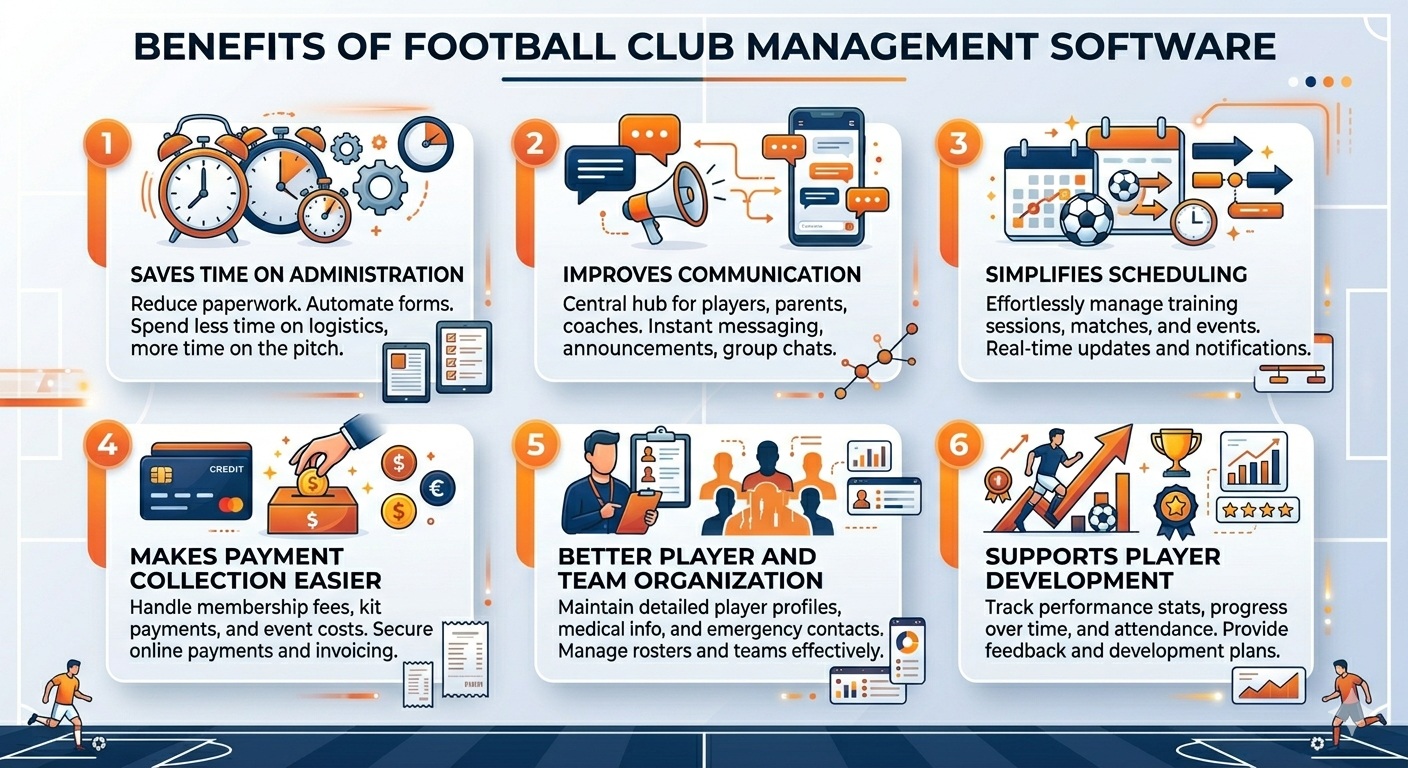
6. Supports Player Development
Many modern platforms now include coaching and performance analysis tools.
These features may include:
Match statistics
Performance tracking
Tactical analysis
Training plans
Video analysis
Development reports
This allows coaches to monitor progress and make data-driven decisions.
Key Features to Look For in Football Club Management Software
Not all platforms offer the same functionality. Before choosing software for your club, focus on the features that match your club’s needs.
Here are the most important features to evaluate.
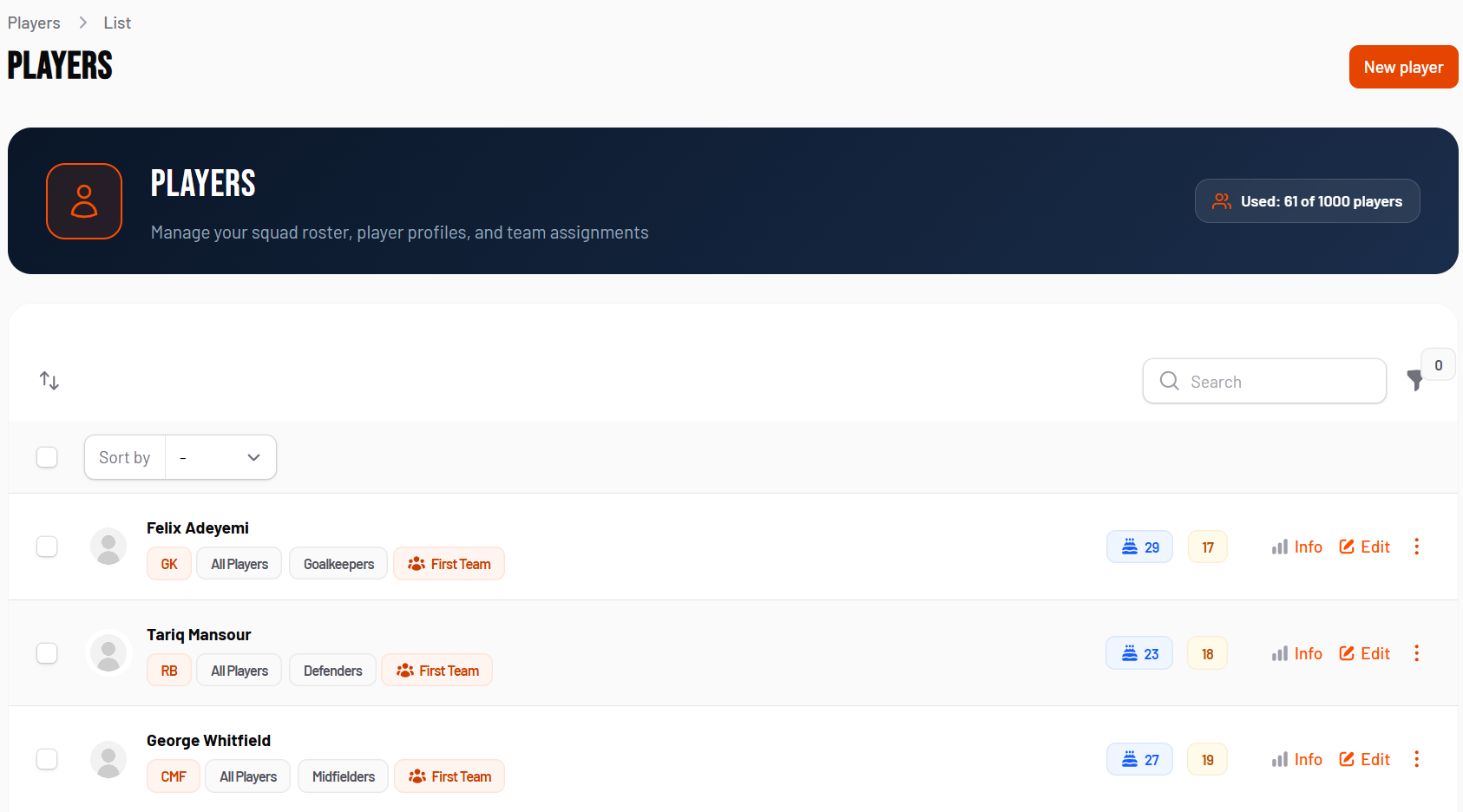
Team and Player Management
A strong player database is essential.
Look for software that supports:
Player registrations
Squad management
Attendance tracking
Player availability
Medical records
Guardian information
This becomes especially important for youth football clubs.
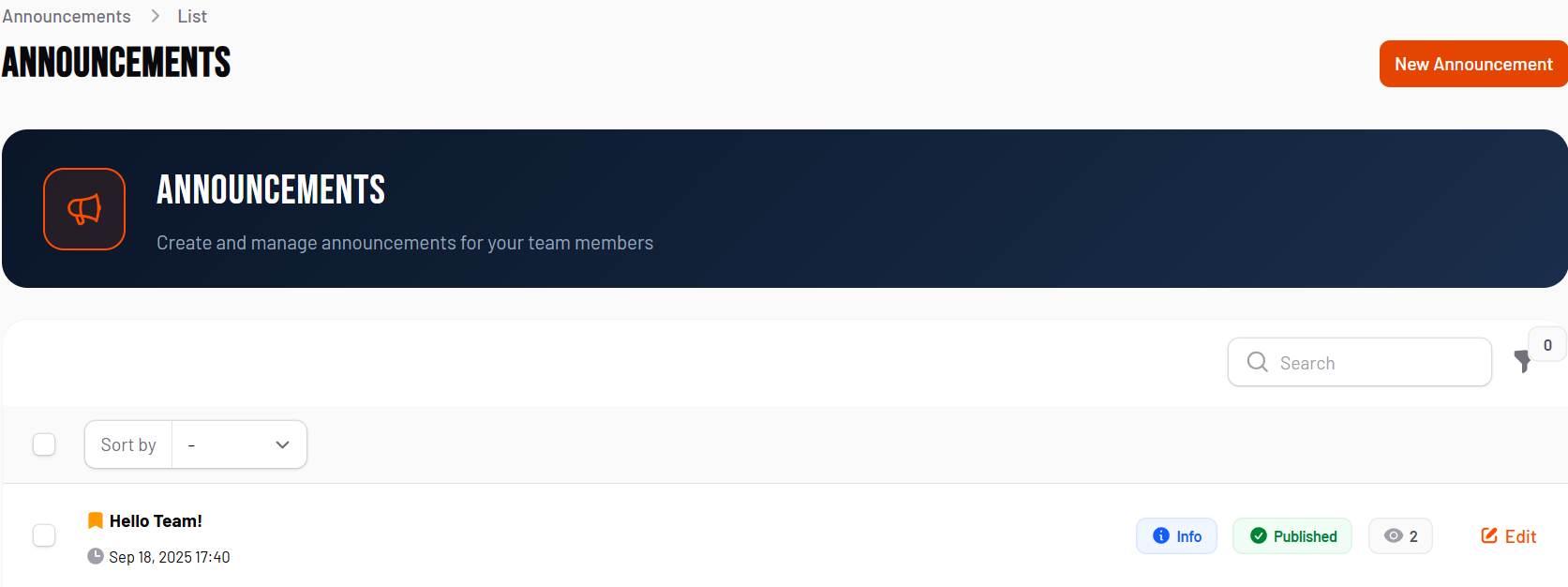
Communication Tools
Good communication tools should include:
Push notifications
Team chat
Parent messaging
Match reminders
Schedule updates
Automated announcements
The best football club management software keeps everyone informed without relying on multiple apps.
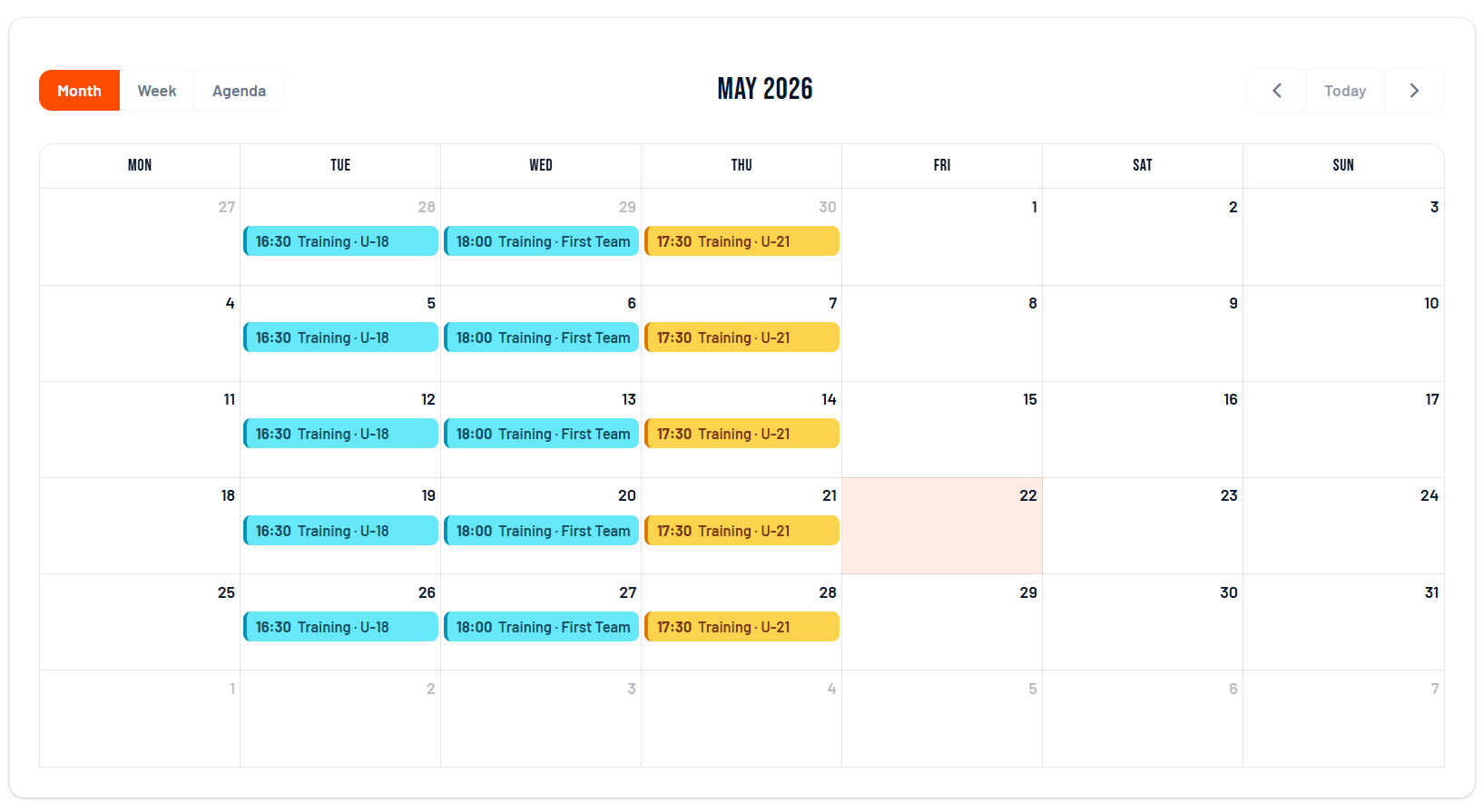
Fixture and Training Scheduling
Scheduling tools should allow clubs to manage:
Fixtures
Training sessions
Tournament calendars
Facility bookings
Coach availability
A shared calendar system improves organization across multiple teams.
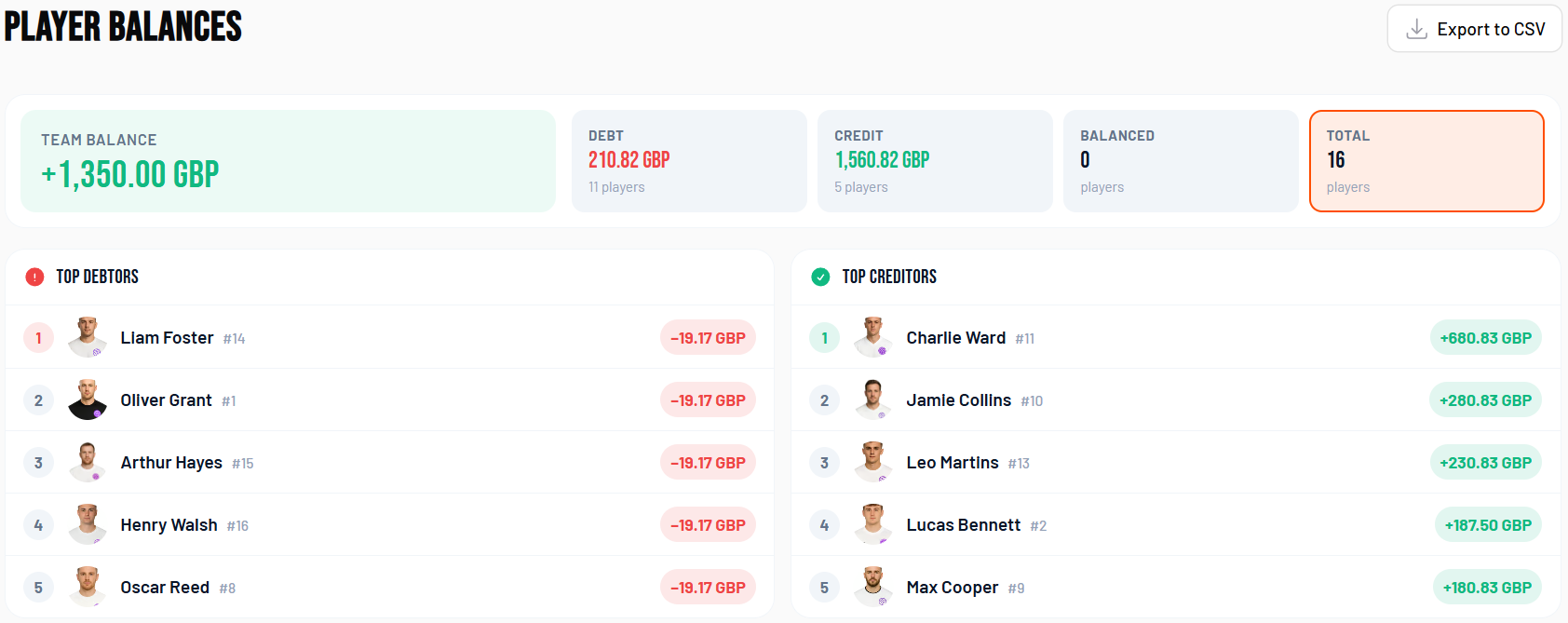
Financial Management
Financial tools can save clubs significant administrative effort.
Useful features include:
Online payments
Membership subscriptions
Invoice generation
Expense tracking
Financial reports
Some platforms also support fundraising and sponsorship management.
Performance Analytics
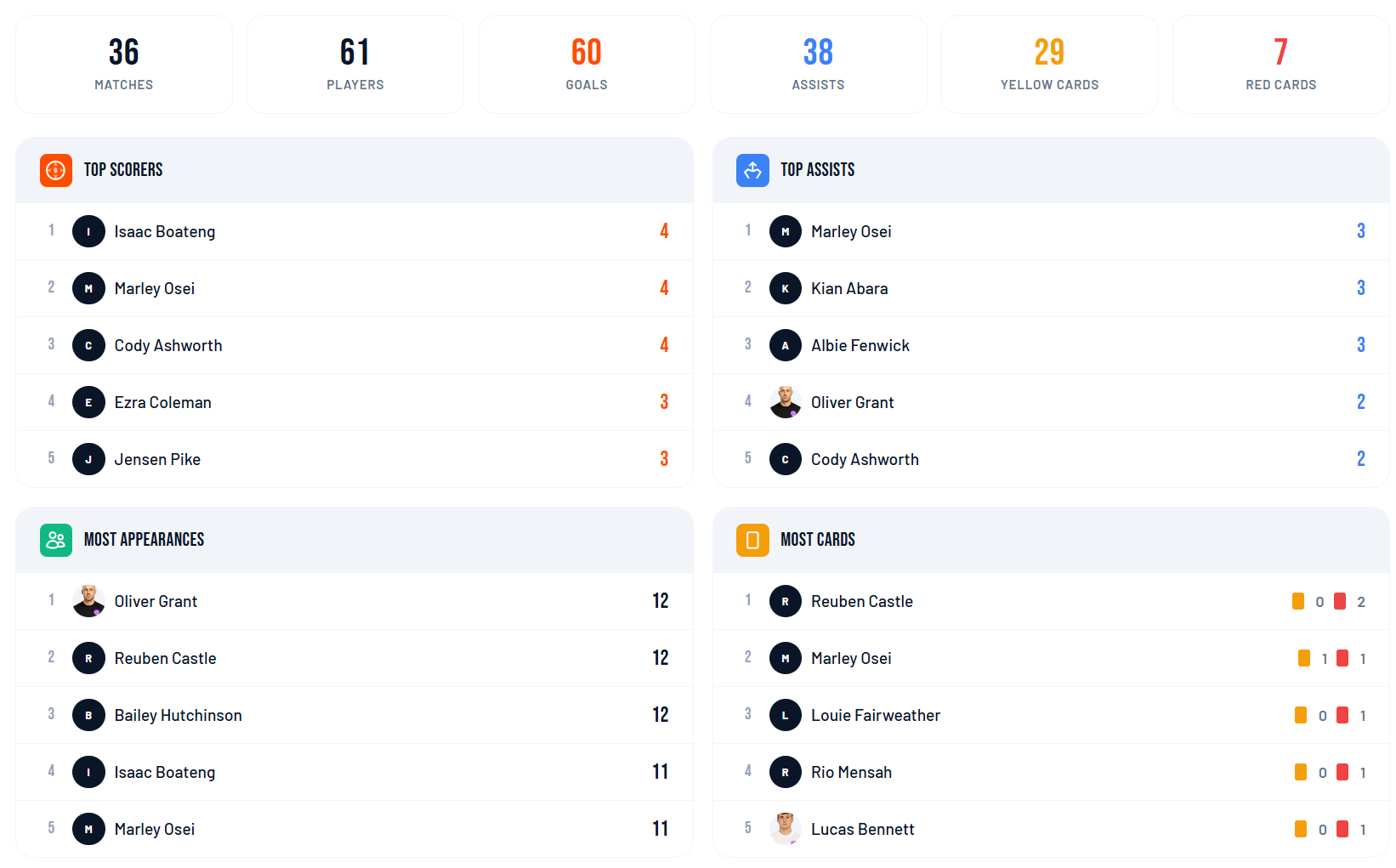
For clubs focused on development, analytics tools are increasingly important.
Look for features like:
Match reports
Player statistics
Tactical analysis
Performance dashboards
Video integration
These tools help coaches improve player performance and team strategy.
How to Choose the Right Football Club Management Software
Every club has different requirements, budgets, and structures.
When evaluating options, consider the following factors:
Club Size
Some platforms are better suited for grassroots teams, while others are designed for larger academies and multi-team organizations.
Choose software that can scale with your club’s growth.
Ease of Use
The best football club management software should simplify operations — not create additional complexity.
Look for:
Clean interfaces
Easy setup
Minimal training requirements
User-friendly mobile apps
If volunteers and parents struggle to use the system, adoption will be difficult.
Integration Capabilities
Many clubs already use external systems for registration, league management, or payments.
Software that integrates with existing tools can reduce duplicate work and improve efficiency.
Customer Support
Reliable support is extremely important, especially during setup.
Look for providers that offer:
Onboarding assistance
Live support
Training resources
Knowledge bases
Strong customer support can make implementation much smoother.
Pricing
Football club management software pricing varies widely depending on features and club size.
Some platforms offer:
Free starter plans
Monthly subscriptions
Per-player pricing
Transaction-based fees
Always compare pricing against the features your club actually needs.
Common Challenges Football Club Management Software Solves
Football clubs often face the same operational problems:
Disorganized communication
Missed payments
Scheduling conflicts
Attendance tracking issues
Lost paperwork
Volunteer burnout
Manual admin overload
Modern football club management software centralizes operations and automates repetitive tasks, helping clubs run more professionally and efficiently.
Why KickPilot Is a Great Choice for Football Clubs
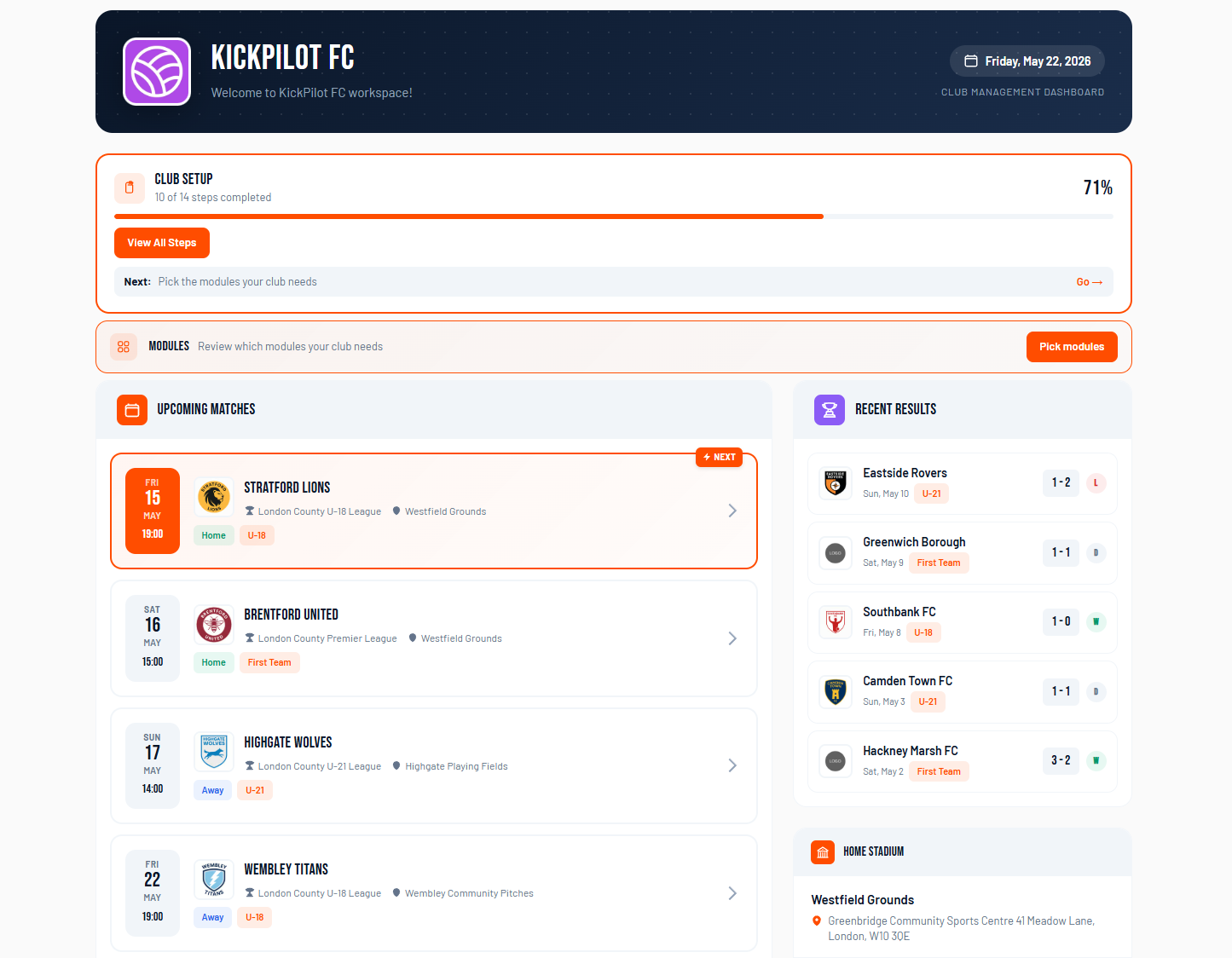
Platforms like KickPilot are designed specifically for modern football clubs, coaches, academies, and teams that want to simplify organization and improve communication. KickPilot combines team management, training planning, match scheduling, player communication, attendance tracking, and tactical tools in one centralized platform.
Instead of juggling spreadsheets, messaging apps, and separate scheduling tools, clubs can manage everything in a single system. For grassroots clubs and growing academies, this type of football club management software can significantly reduce administrative workload while helping coaches stay focused on player development and team performance.
Final Thoughts
The modern game is becoming increasingly digital, and clubs that embrace technology gain a major organizational advantage.
The right football club management software can transform how your club operates by improving communication, simplifying administration, automating payments, organizing schedules, and supporting player development.
Whether you run a small grassroots team or a growing football academy, investing in quality football club management software helps create a more professional experience for coaches, players, parents, and administrators alike.
For clubs looking to save time, improve efficiency, and focus more on football development, adopting a centralized management platform is no longer optional - it’s becoming essential.
FAQs
What is football club management software?
Football club management software is a digital platform that helps football clubs organize operations such as scheduling, communication, player management, attendance tracking, payments, and performance analysis in one centralized system.
What are the benefits of football club management software?
The main benefits include saving time on administration, improving communication, simplifying scheduling, automating payments, organizing player data, and supporting player development through analytics and tracking tools.
Who should use football club management software?
Football club management software is useful for grassroots clubs, football academies, youth teams, amateur clubs, semi-professional organizations, coaches, and club administrators who want to streamline operations.
What features should I look for in football club management software?
Key features include:
Team and player management
Training and fixture scheduling
Attendance tracking
Communication tools
Online payments
Performance analytics
Mobile app access
Reporting and statistics
Can football club management software help coaches?
Yes. Football club management software helps coaches manage training schedules, communicate with players, track attendance, analyze performance, and reduce administrative workload so they can focus more on coaching.
Is football club management software suitable for youth football clubs?
Absolutely. Many platforms are designed specifically for youth football clubs and include parent communication tools, player registration, medical records, attendance tracking, and subscription management.
How does football club management software improve communication?
Most platforms centralize communication through team messaging, push notifications, reminders, announcements, and event updates, reducing confusion caused by scattered chats and emails.
Does football club management software include payment collection?
Many modern football club management software platforms support online payments, recurring subscriptions, invoice generation, payment reminders, and financial reporting for easier club administration.