How to Train Football Players Using Formations
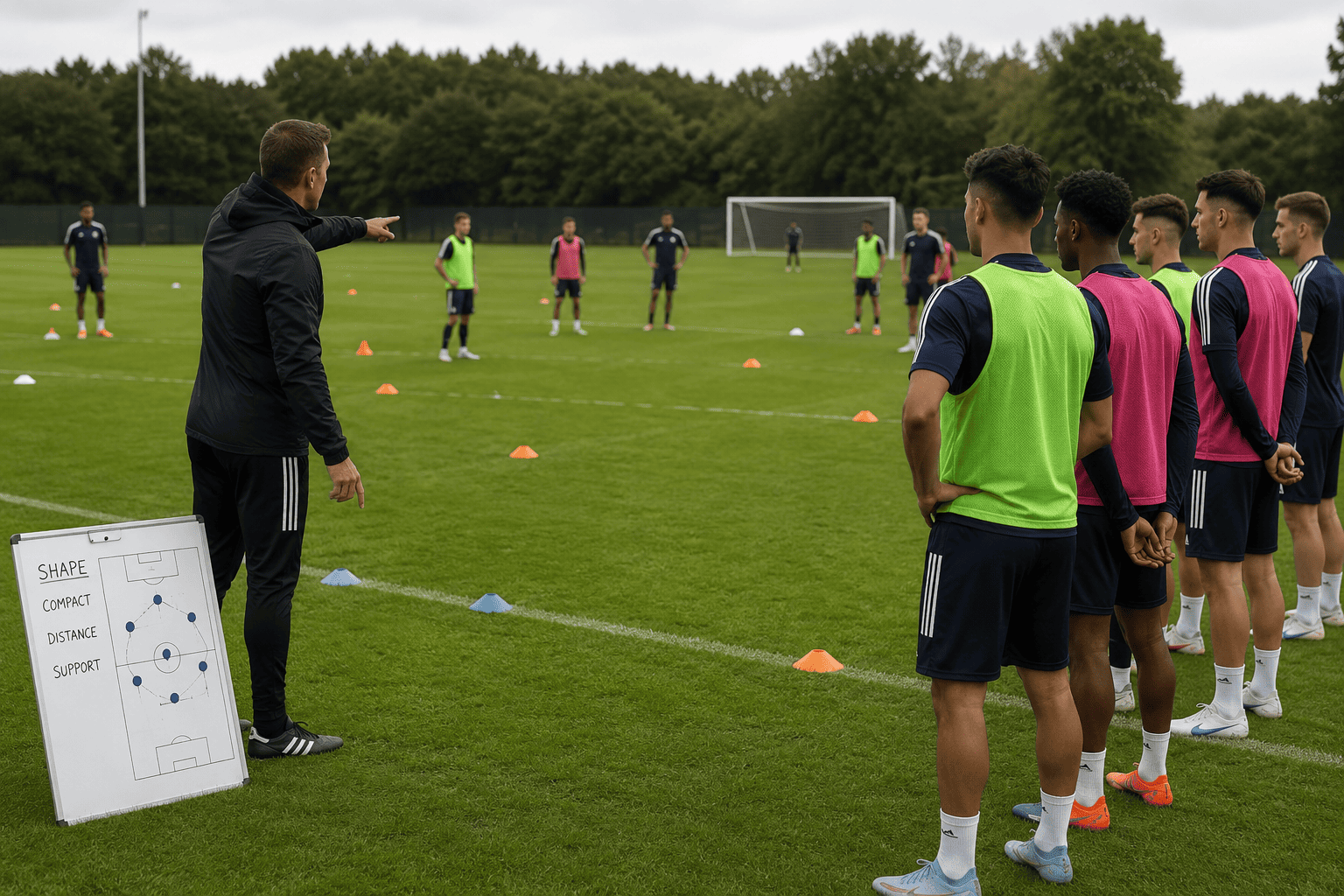
Quick Answer: Training players in a formation means practising the specific movements, spacing, and decisions that shape requires, not just running the formation on paper. The most effective method is to break training into position-specific drills (defenders, midfielders, forwards), then rebuild the full shape through small-sided games and phase-of-play practice. Tools like KickPilot help coaches plan and visualise these sessions before they ever step on the pitch.
Picking a formation is the easy part. Most coaches can sketch a 4-3-3 on a napkin in ten seconds. The hard part is turning that shape into something your players actually understand and execute under pressure, on a wet Tuesday night, with half the squad still learning where "left back" even stands.
This guide breaks down how to actually train a formation, not just explain it, with drills you can run this week for the four shapes most grassroots and academy teams use.
If you haven't settled on a formation yet, our Football Formations Guide breaks down the pros, cons, and best-fit squads for every major shape.
Why Training By Formation Beats Generic Drills
Most training sessions default to generic drills: passing squares, shooting practice, a scrimmage at the end. Nothing wrong with any of that on its own. But if your matchday shape is a 4-3-3 and your Tuesday session never once puts players in 4-3-3 positions and spacing, you're training skills, not the system.
Formation-based training closes that gap. It teaches players:
Where their teammates should be when they're on the ball
What space to occupy when they're not
How to move as a unit when possession changes
How to Train Each Formation
Below are practical, session-ready drills for the four formations most common at grassroots, youth, and academy level. Each one focuses on the specific coordination problem that formation tends to create.
4-4-2: Training Compactness and Width
The 4-4-2 lives or dies on horizontal compactness: two banks of four that shift together. The most common failure isn't individual mistakes, but gaps opening between the lines when the team doesn't shift as a unit.
Drill: Shadow Shifting. Set up your back four and midfield four with no ball. Call out a location on the pitch and have both lines shift together, laterally and vertically, to maintain 8-10 yards of spacing between the banks. Add a ball once the shape holds consistently.
Want the full tactical breakdown, including strengths and weaknesses? See our 4-4-2 Formation Explained guide.
4-3-3: Training the Front Three's Pressing Triggers
A 4-3-3 asks a lot of your wingers and lone striker, who need to press as a coordinated front line rather than chase individually.
Drill: Trigger Pressing Rondo. In a 30x20 area, set up a 6v3 rondo where the "3" represents your front three. Define one clear pressing trigger (e.g., a heavy touch, a backward pass, or the ball reaching a certain zone). The front three only press together when the trigger fires; otherwise they hold shape and force play wide.
This teaches forwards to press as a coordinated line instead of individually chasing the ball, which is usually where a 4-3-3's press breaks down at grassroots level.
Full positional breakdown in our 4-3-3 Formation Guide.
4-2-3-1: Training the Double Pivot
The two holding midfielders in a 4-2-3-1 need to cover for each other constantly: when one steps to press, the other has to shift across to protect the space behind.
Drill: Cover and Rotate Two-touch possession game, 4v4 plus two neutral holding midfielders in the centre. Every time one pivot player engages the ball carrier, the other must immediately shift to cover the vacated zone. Coach stops play the moment both pivots are pulled out of position at once, a common breakdown that leaves a direct lane to the back four.
3-5-2: Training Wing-Back Stamina and Timing
A back three only works if your wing-backs can consistently get up and down the full length of the pitch, arriving in time to attack and recovering in time to defend.
Drill: Overload Transitions Small-sided game (7v7 works well) where wing-back zones are marked out on both flanks. Wing-backs must touch both attacking and defensive zones within a set number of possessions, rewarding teams whose wing-back arrives in time to create a numbers-up situation out wide.
A Simple 4-Step Session Structure for Any Formation
Whichever shape you coach, most effective formation-training sessions follow the same underlying structure:
Warm-up with the ball: rondo or possession game that mirrors your formation's spacing, not just a generic passing warm-up.
Position-specific work: isolate the unit that needs the most work that week (back line, midfield, front line).
Small-sided game in shape: rebuild the full formation at reduced numbers so players get more touches while still practising real shape.
Full-team phase of play: attacking or defensive phase practice at full numbers, as close to matchday intensity as your session allows.
This structure works for a first-team squad and an U12 team alike; only the complexity of the coaching points changes.
For a deeper look at building a full tactical identity around your formation, read How to Create Football Tactics That Win Matches.
Common Mistakes Coaches Make When Training Formations
Only ever training in formation during 11v11 scrimmages. Small-sided games in shape are more repetition-dense and easier to coach.
Never rotating players through different positions in the shape. Understanding the formation from more than one role builds better tactical awareness across the squad.
Treating the formation as fixed regardless of the opponent. The best coaches adjust spacing and pressing triggers week to week; the shape is a starting point, not a rulebook.
Skipping the walkthrough. A slow, no-pressure walkthrough of the shape before adding intensity saves far more time than it costs, especially with younger or newer players.
Turn Training Plans Into Matchday Lineups With KickPilot
Once your players know the formation on the training pitch, the next step is getting it onto the team sheet clearly, with no more scribbled diagrams or last-minute "wait, who's playing where?" messages in the group chat.
Final Thoughts
A formation is only as good as your team's ability to execute it under pressure. Skip the generic-drills-only approach, build sessions around the actual coordination problems your shape creates, and you'll see it show up on matchday a lot faster than expecting players to "just figure it out" in the game.
Ready to plan your next session and get your formation onto a clean, shareable lineup? Try KickPilot free and set up your squad in minutes, no spreadsheet required.