Football Formations Guide: Understanding Tactics, Shapes, and Winning Setups

Football formations shape the way every match is played. Whether you are coaching a youth team, analyzing professional tactics, managing an amateur squad, or simply trying to understand the game better, formations are at the center of football strategy.
From classic setups like the 4-4-2 to modern tactical systems such as the 3-4-3 and 4-2-3-1, formations determine how players move, defend, attack, and control space on the pitch.
In this complete football formations guide, we’ll break down:
The purpose of football formations
The most common and classic football formations
Basic football formations for beginners
Football formation tactics and strategies
How formations impact attacking and defensive play
How coaches choose formations based on player strengths
Modern trends in football team formation strategies
What Are Football Formations?
Football formations describe how players are positioned on the pitch. A formation is usually written using numbers that represent defenders, midfielders, and attackers.
For example:
4-4-2 = 4 defenders, 4 midfielders, 2 forwards
4-3-3 = 4 defenders, 3 midfielders, 3 forwards
3-5-2 = 3 defenders, 5 midfielders, 2 forwards
The goalkeeper is not included in the numbers.
A football lineup formation provides the structure of the team both in possession and out of possession. While players move dynamically during a game, the formation creates the foundation for team shape and responsibilities.
Understanding football formations helps players:
Maintain positioning
Create attacking opportunities
Defend efficiently
Control space
Support teammates
Transition between attack and defense
Why Football Formations Matter
Every football formation has strengths and weaknesses.
The right setup can:
Maximize player strengths
Cover defensive weaknesses
Create numerical advantages
Improve pressing structure
Increase attacking width
Strengthen midfield control
The wrong formation can leave teams exposed defensively or disconnected in attack.
Football strategies and formations work together. A team that wants to dominate possession may use a different setup from a team focused on counterattacking.
For example:
Possession-heavy teams often prefer 4-3-3 or 4-2-3-1
Defensive teams may use 5-4-1
High-pressing systems frequently use 4-3-3
Counterattacking teams often use 3-5-2 or 4-4-2
No single formation guarantees success. The best football team formation strategies depend on player quality, tactical discipline, and adaptability.
Basic Football Formations Explained
If you’re new to tactics, starting with basic football formations is the best approach.
These formations are commonly used at youth, amateur, and professional levels because they are relatively simple to organize and understand.
4-4-2 Formation
The 4-4-2 is one of the most classic football formations ever used.
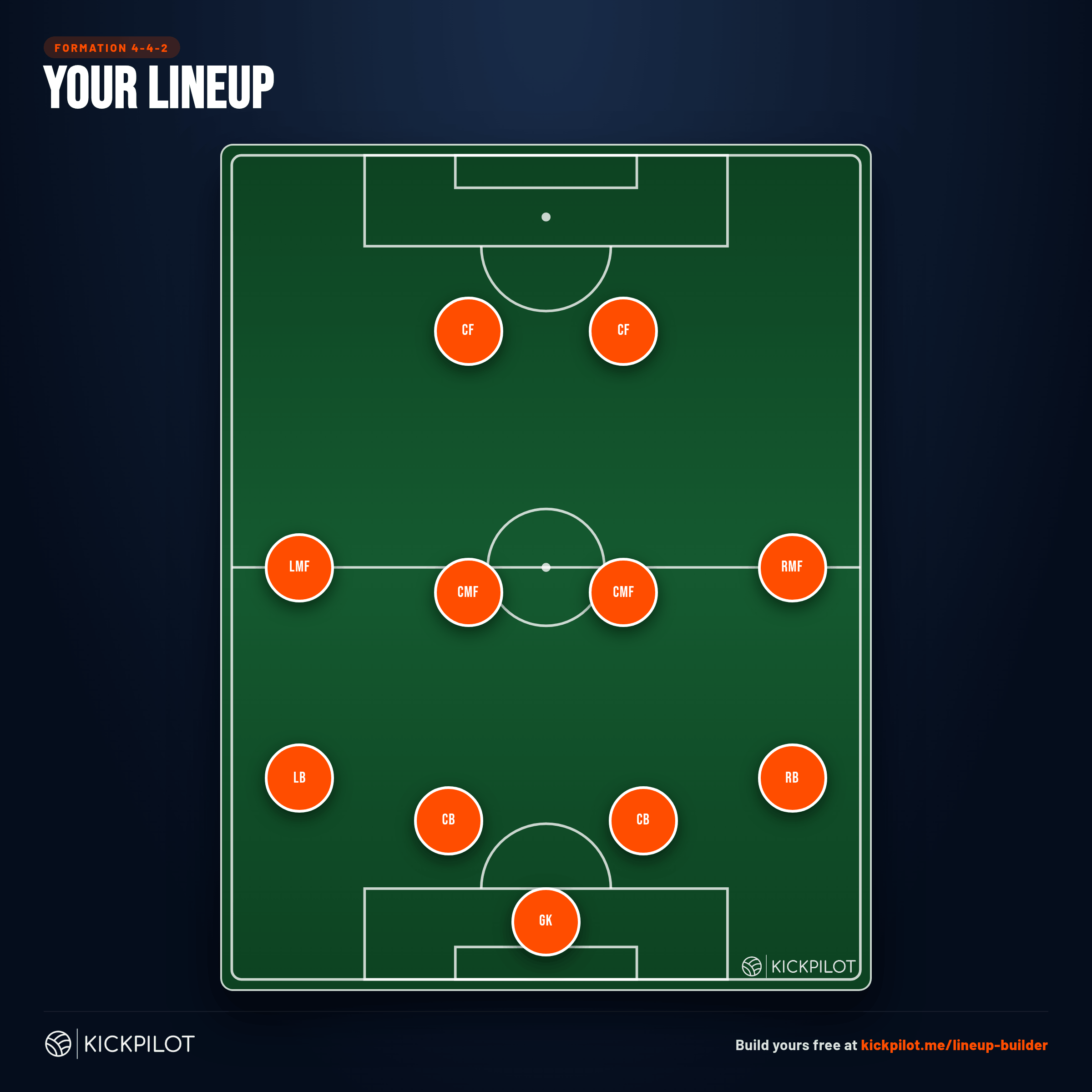
Structure
4 defenders
4 midfielders
2 strikers
Strengths
Balanced shape
Strong defensive organization
Easy to teach
Good width from wide midfielders
Effective partnership between two forwards
Weaknesses
Can be outnumbered in midfield
Less flexible in modern possession systems
Requires disciplined wide players
The 4-4-2 remains one of the most recognizable football formation systems in history.
It is especially useful for:
Youth football
Amateur teams
Counterattacking football
Defensive compactness
Famous Teams That Used 4-4-2
Manchester United under Sir Alex Ferguson
Atletico Madrid under Diego Simeone
Leicester City during their Premier League-winning season
4-3-3 Formation
The 4-3-3 is one of the most popular modern football formations.
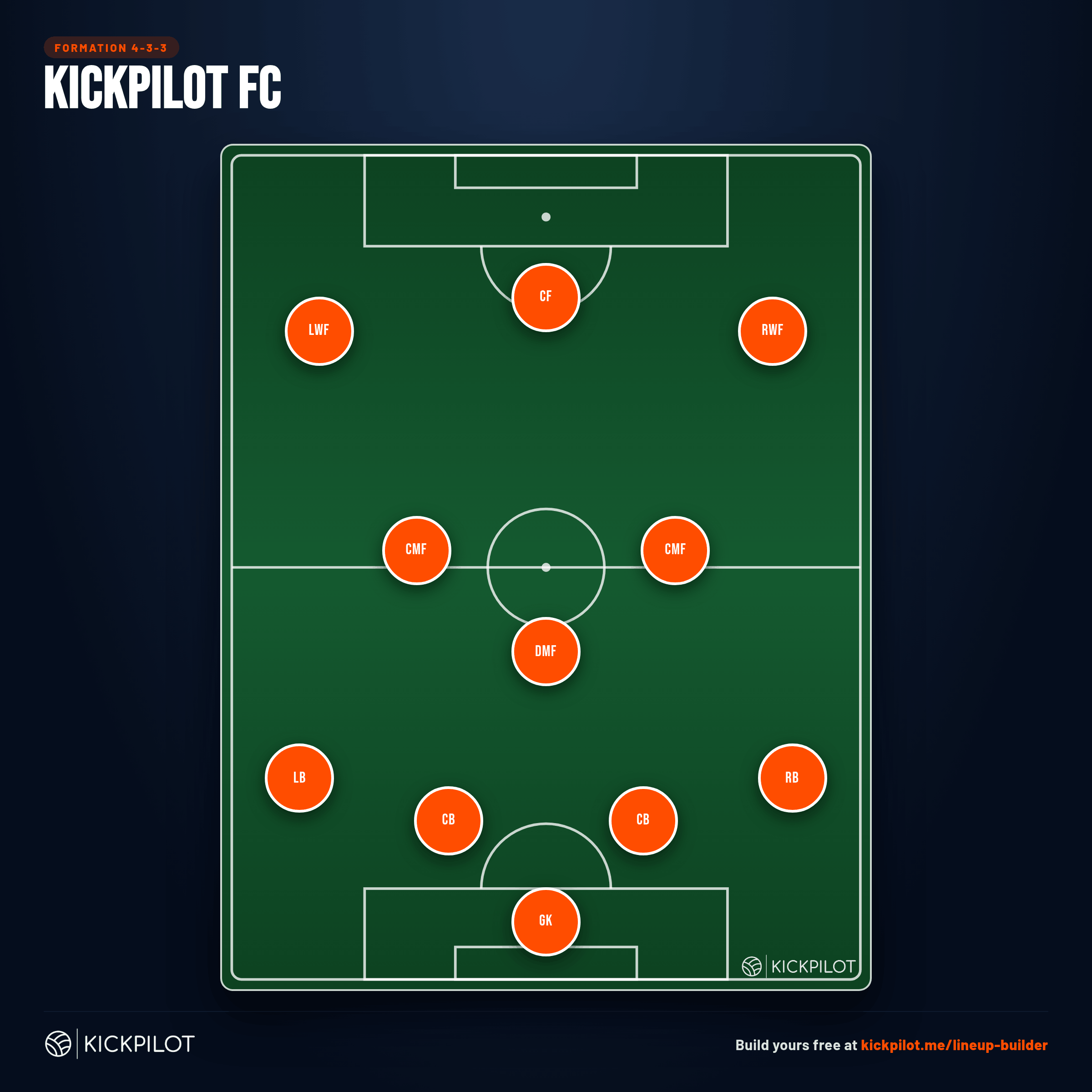
Structure
4 defenders
3 midfielders
3 forwards
Strengths
Excellent attacking width
Strong pressing potential
Midfield control
Flexible transitions
Supports possession football
Weaknesses
Demands athletic wingers
Fullbacks must cover large spaces
Vulnerable to counterattacks if the midfield loses shape
Many elite clubs use 4-3-3 because it creates natural triangles across the pitch.
This formation is commonly associated with:
High pressing
Positional play
Fast attacking football
Famous Teams That Used 4-3-3
Barcelona under Pep Guardiola
Liverpool under Jurgen Klopp
Real Madrid during multiple Champions League wins
4-2-3-1 Formation
The 4-2-3-1 is one of the most balanced football match formation systems today.
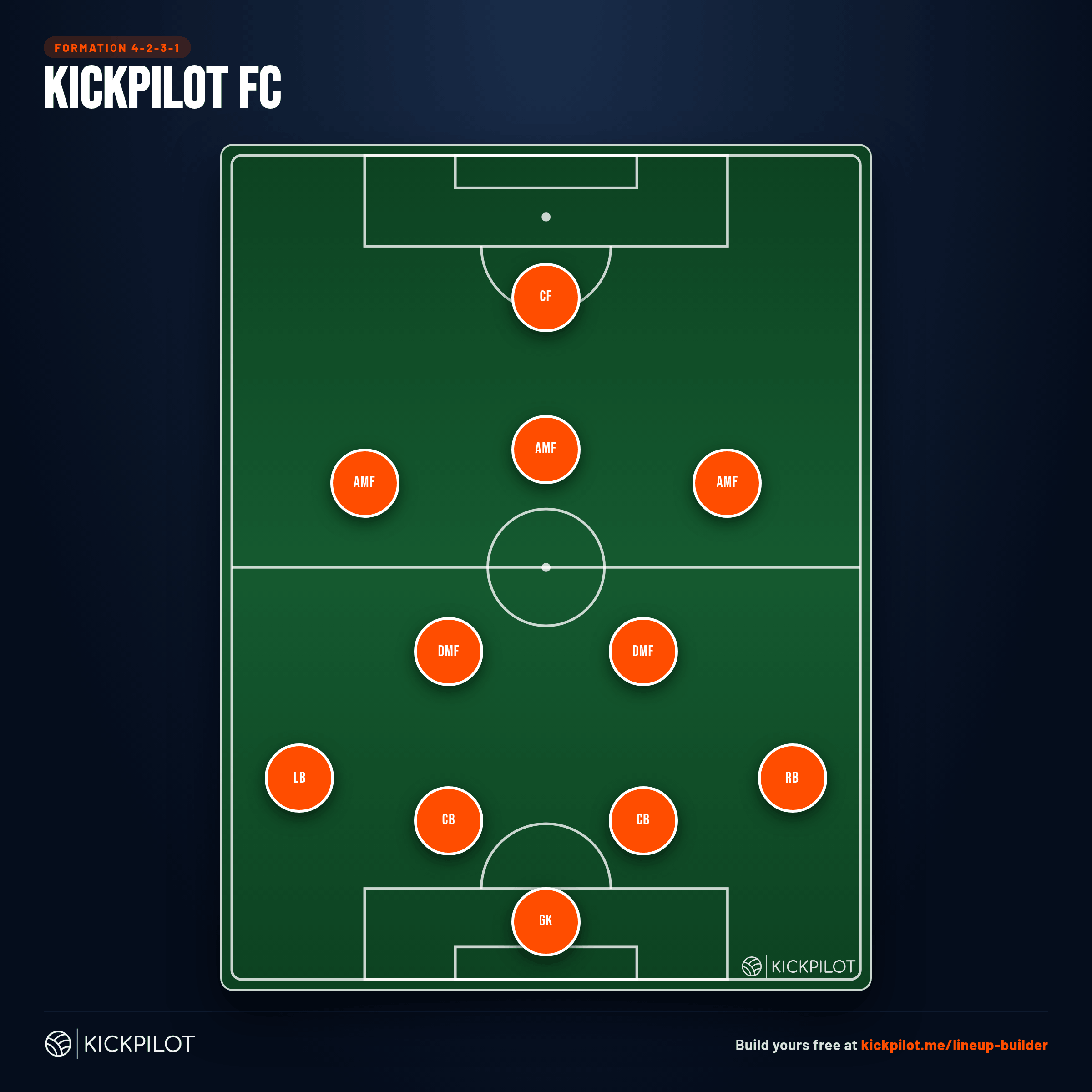
Structure
4 defenders
2 defensive midfielders
3 attacking midfielders
1 striker
Strengths
Strong midfield protection
Flexible attacking movement
Great balance between attack and defense
Supports possession and pressing
Weaknesses
Lone striker can become isolated
Requires creative attacking midfielders
Defensive midfielders need strong tactical awareness
This setup allows teams to defend compactly while still creating attacking overloads.
Why Coaches Like It
The 4-2-3-1 offers tactical flexibility. Teams can shift into:
4-4-2 while pressing
4-3-3 in possession
4-5-1 defensively
That adaptability makes it one of the most common football formation tactics in modern football.
3-5-2 Formation
The 3-5-2 uses three center-backs and emphasizes midfield dominance.
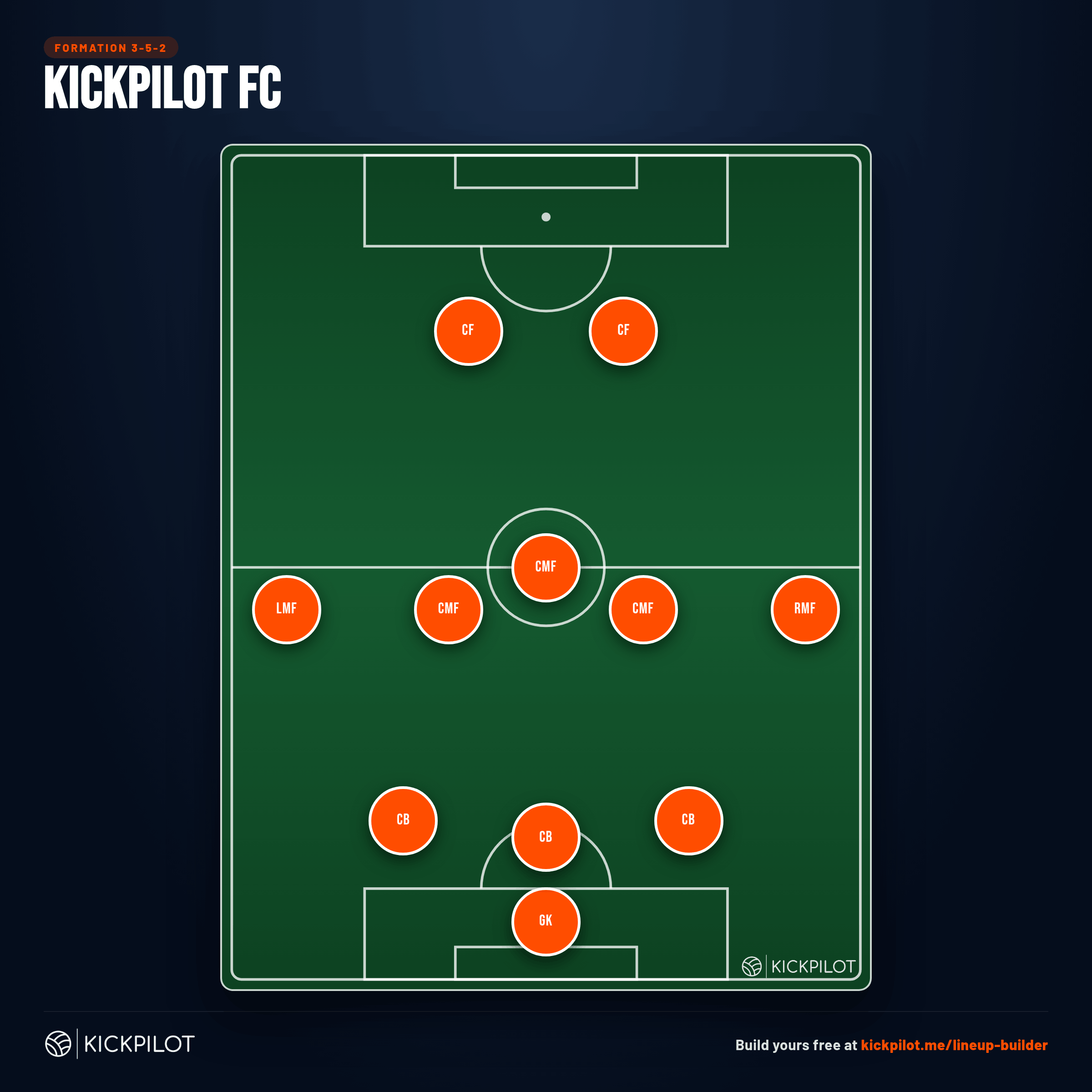
Structure
3 defenders
5 midfielders
2 forwards
Wingbacks are critical in this system.
Strengths
Midfield superiority
Strong central presence
Two-striker partnership
Flexible defensive transitions
Weaknesses
Wingbacks need elite stamina
Wide defensive areas can be exposed
Requires highly organized center-backs
The 3-5-2 is effective for teams that want to dominate central areas while still maintaining attacking options.
5-3-2 Formation
The 5-3-2 is a more defensive variation of systems with wingbacks.
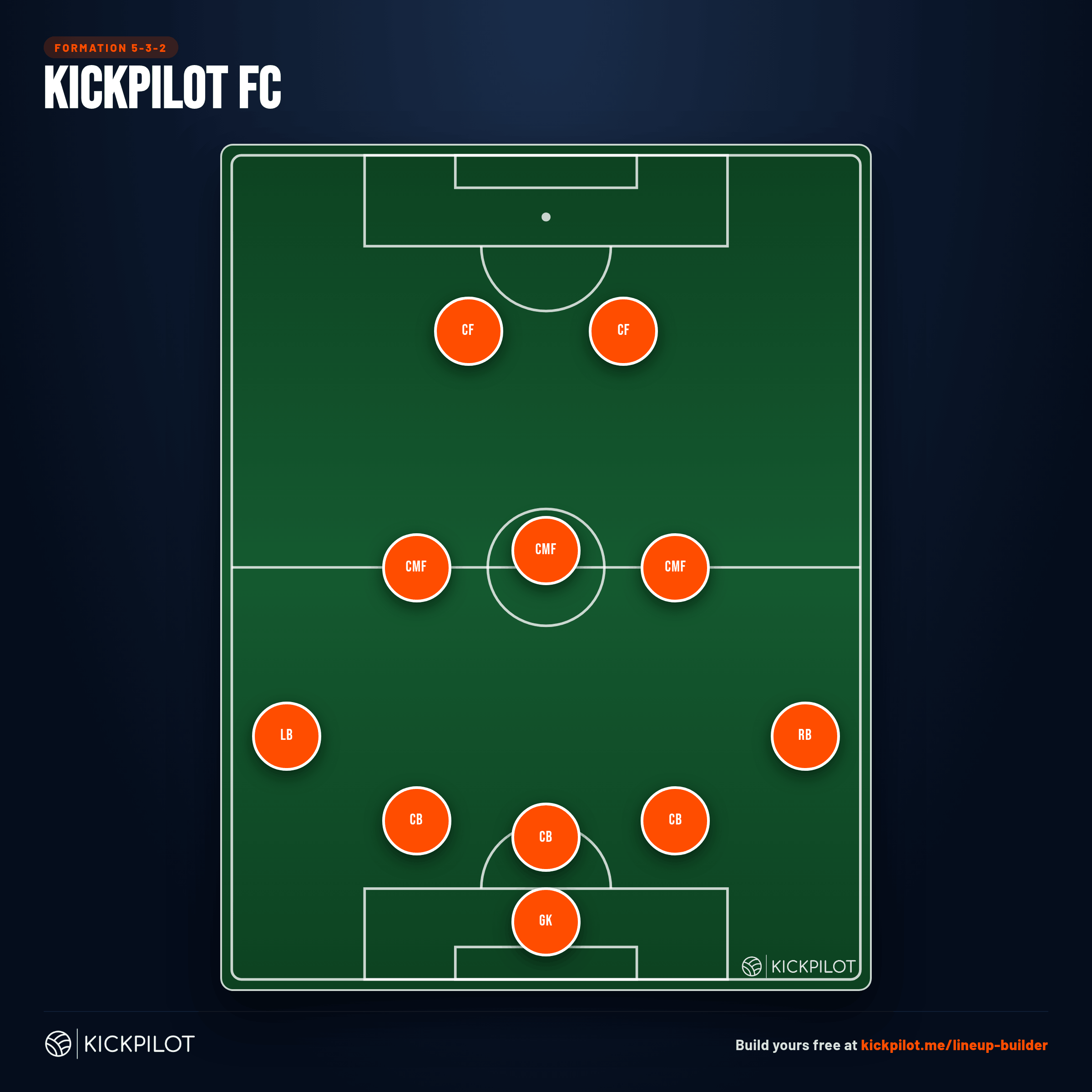
Strengths
Strong defensive block
Difficult to break down
Good counterattacking shape
Extra protection against wide attacks
Weaknesses
Can become overly defensive
Less attacking width
Strikers may receive limited support
This formation is commonly used by underdogs facing stronger opponents.
Classic Football Formations That Shaped the Game
Football tactics have evolved dramatically over the decades. Several classic football formations helped define different eras of the sport.
The 2-3-5 Pyramid
One of the earliest football formations was the famous 2-3-5.
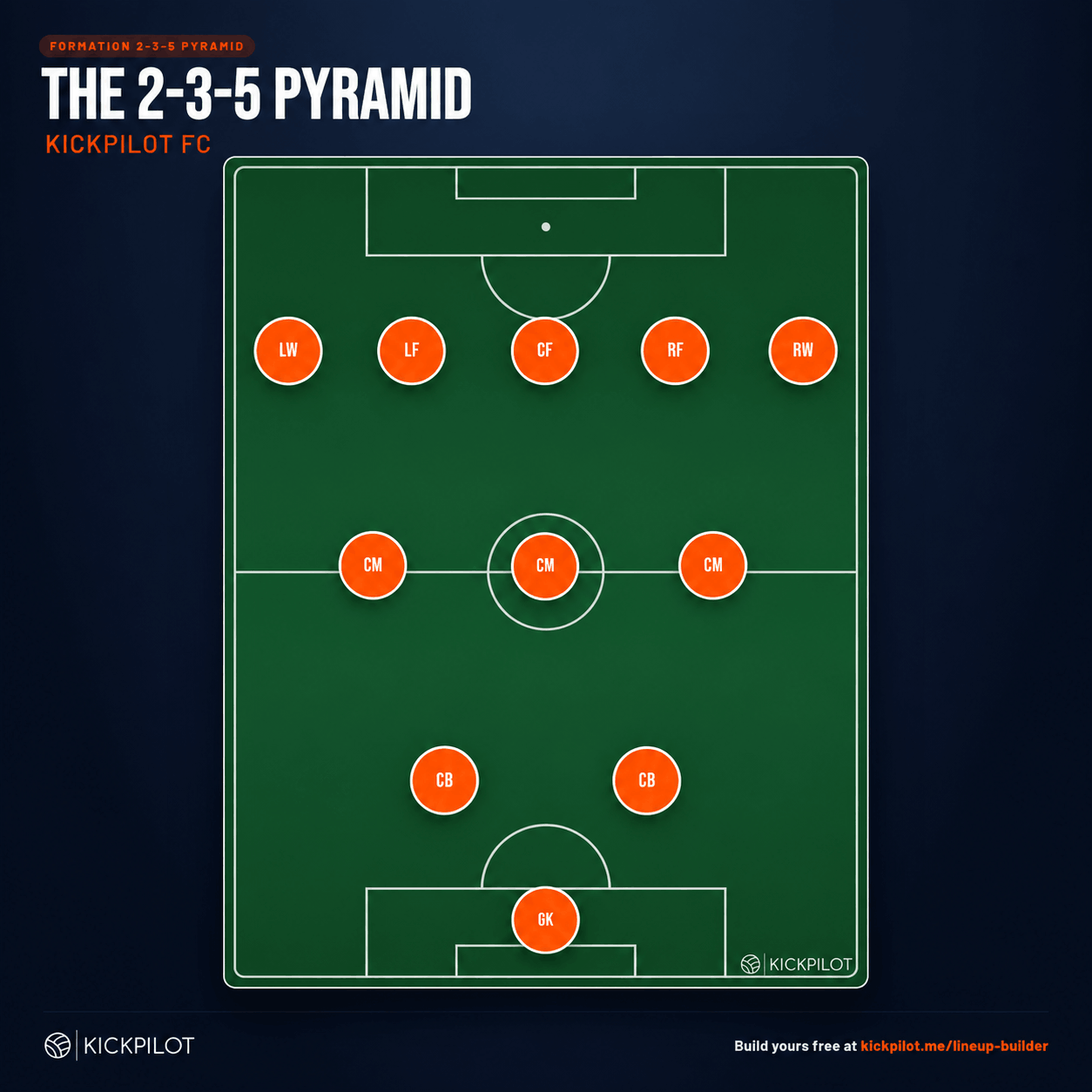
Structure
2 defenders
3 midfielders
5 attackers
This aggressive setup dominated football in the late 19th and early 20th centuries. At the time, football emphasized attacking play far more than defensive organization.
While no modern team uses the 2-3-5 as a true football lineup formation today, its influence remains visible in attacking structures.
The WM Formation
The WM formation became revolutionary in the 1920s and 1930s.
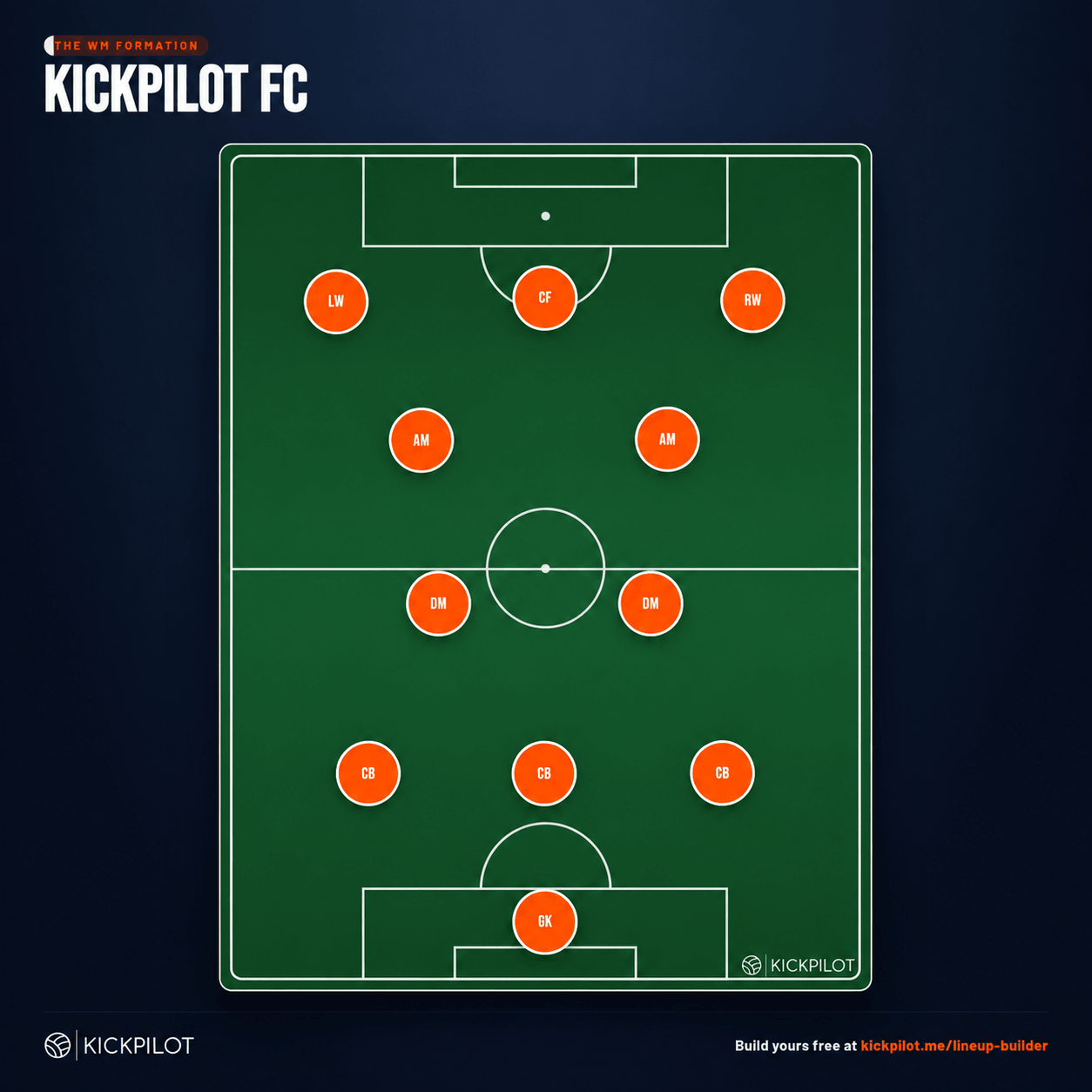
Structure
3 defenders
2 holding midfielders
2 attacking midfielders
3 forwards
The formation got its name because the player arrangement resembled the letters “W” and “M.”
It introduced:
Better defensive structure
Organized midfield play
Tactical balance
The WM helped shape modern football formation tactics.
Catenaccio
Italian football popularized the defensive Catenaccio system.
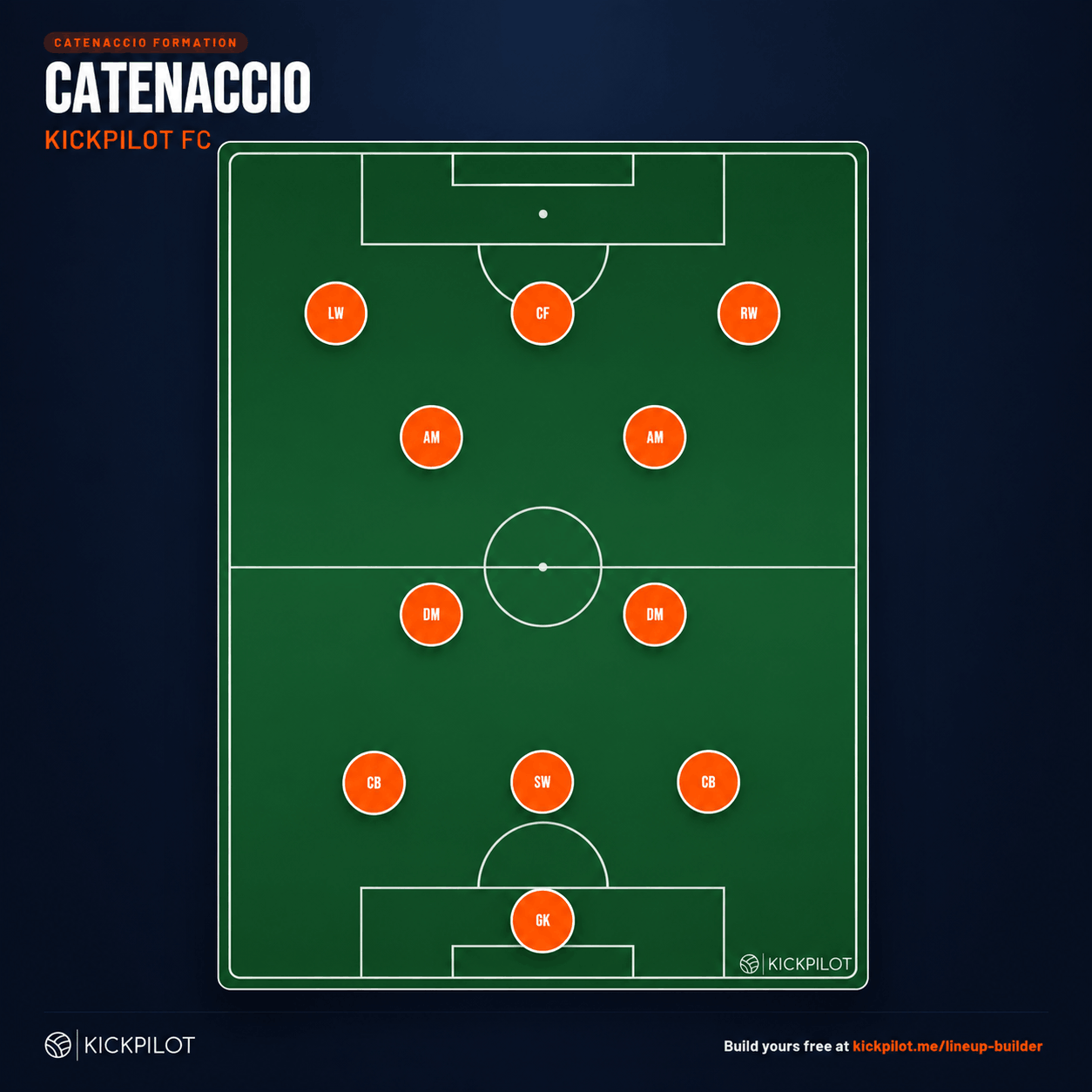
Features
Sweeper behind defenders
Deep defensive block
Counterattacking focus
Strict man marking
Although modern football has moved away from traditional sweepers, many defensive principles still exist today.
Total Football
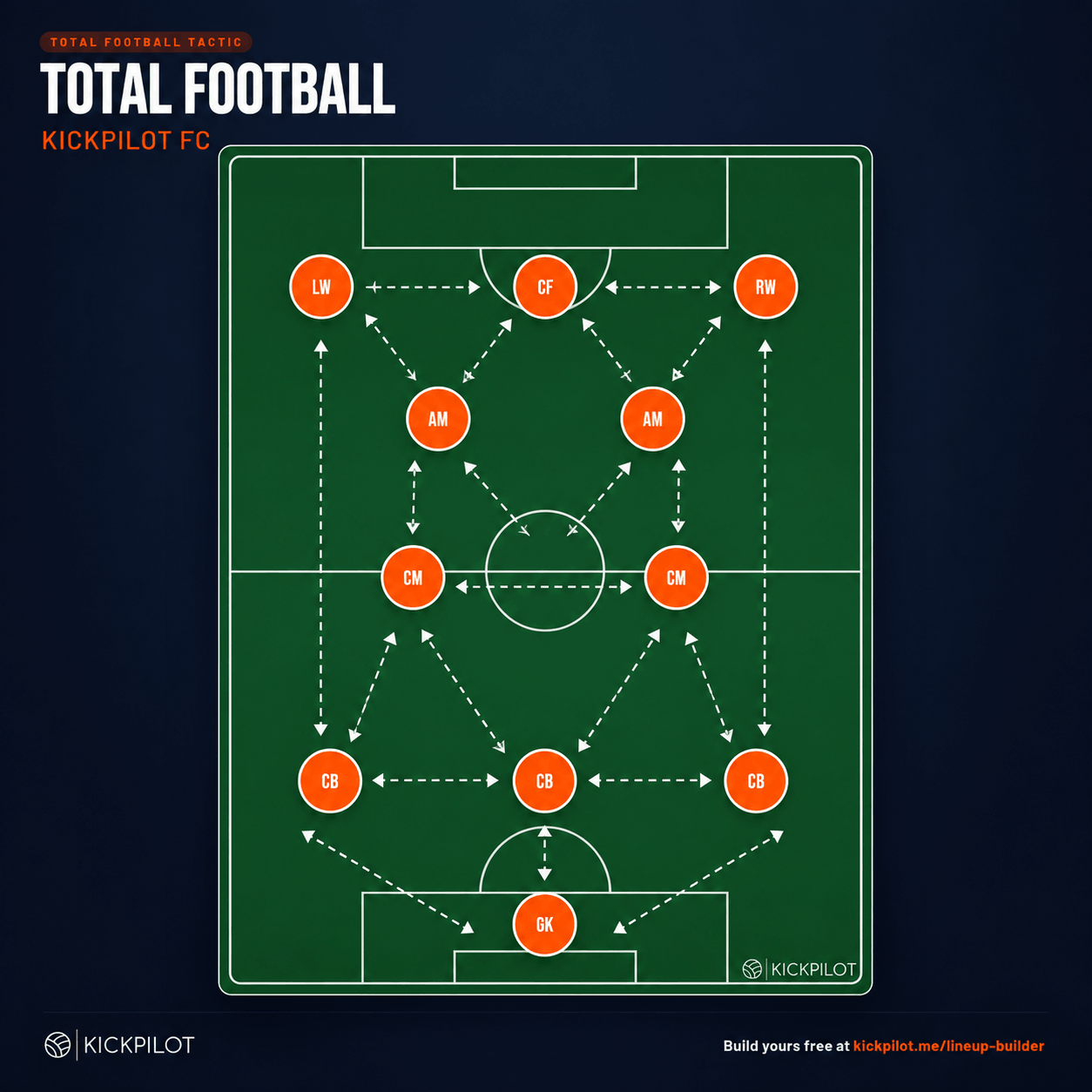
Dutch football transformed tactical thinking with Total Football.
Popularized by Ajax and the Netherlands in the 1970s, Total Football emphasized:
Positional interchange
Fluid movement
Pressing
Technical versatility
This philosophy influenced many modern football team formation strategies.
Pep Guardiola’s positional football and modern pressing systems trace their roots back to Total Football.
All Football Formations: Common Systems Used Today
There are dozens of tactical systems in modern football. Here is a football formation list featuring many commonly used shapes:
Four-Defender Systems
4-4-2
4-3-3
4-2-3-1
4-1-4-1
4-5-1
4-1-2-1-2 (diamond)
4-3-1-2
Three-Defender Systems
3-4-3
3-5-2
3-4-1-2
3-4-2-1
Five-Defender Systems
5-3-2
5-4-1
5-2-3
Each football formation offers unique tactical possibilities.
For example:
A 4-3-3 may become a 3-2-5 in possession
A 4-2-3-1 may shift into a 4-4-2 press
A 3-5-2 may defend as a 5-3-2
This flexibility is a defining feature of elite football.
Football Formation Tactics and Strategic Principles
Understanding football formation tactics goes beyond memorizing numbers.
Good tactics focus on:
Space control
Numerical superiority
Pressing triggers
Defensive compactness
Passing lanes
Transition speed
Width
Some formations naturally create width.
Examples:
4-3-3
3-4-3
4-2-3-1 with wide wingers
Wide systems stretch defenses and create crossing opportunities.
Compactness
Defensive compactness reduces the space between lines.
Compact teams:
Defend more effectively
Force opponents wide
Reduce passing options
Protect central areas
Formations like 4-4-2 and 5-3-2 often prioritize compactness.
Pressing
Modern football increasingly emphasizes pressing.
High-pressing systems aim to:
Win possession quickly
Force mistakes
Control territory
Maintain attacking pressure
The 4-3-3 is especially effective for coordinated pressing.
Transitions
Transitions are crucial in modern football. Teams must quickly switch between:
Attack to defense
Defense to attack
Choosing the Right Football Formation
There is no universally perfect formation. The best football player formation depends on several factors.
Player Strengths
A coach should always build tactics around available players.
Examples:
Strong wingers favor 4-3-3
Two elite strikers suit 4-4-2 or 3-5-2
Creative attacking midfielders fit 4-2-3-1
Mobile center-backs support back-three systems
Opponent Analysis
Teams also adapt formations based on opponents. Coaches may adjust:
Pressing intensity
Defensive line height
Midfield shape
Width
Counterattacking strategy
For example, against stronger possession teams, coaches may choose more compact formations.
Match Context
Formations can change depending on match situations. Examples:
Leading teams may switch to defensive shapes
Losing teams often add attackers
Teams chasing goals may use aggressive pressing systems
Modern football match formation planning requires tactical flexibility.
How Coaches Actually Use Football Formations
On paper, formations look simple. On the pitch, they require constant communication and adjustment. Coaches typically use formations as a reference point, not a strict rule.
Before the Match
Coaches plan:
Starting football lineup formation
Defensive structure
Pressing style
Attack patterns
Set-piece roles
They also study the opponent’s shape to decide the best counter-approach.
During the Match
Formations shift constantly depending on:
Scoreline
Fatigue
Red or yellow cards
Tactical weaknesses spotted during play
For example:
A 4-2-3-1 may become a 4-4-2 when pressing
A 4-3-3 may drop into a 4-5-1 when defending a lead
A 3-5-2 may turn into a 5-3-2 under pressure
This is why understanding football match formation changes is so important.
After the Match
Coaches analyze:
Whether the formation worked
Where space was lost
How transitions performed
Whether players understood roles
Modern coaching is as much about analysis as it is about training.
Football Formation List by Style
Instead of only grouping formations by numbers, it helps to think about them by playing style.
Possession-Based Formations
These focus on controlling the ball and building patiently:
4-3-3
4-2-3-1
3-2-4-1 (fluid variations)
These systems rely on passing triangles, movement, and patience.
Defensive Formations
These prioritize structure and discipline:
5-4-1
5-3-2
4-4-2 (compact version)
They are often used against stronger opponents or in high-pressure matches.
Balanced Formations
These aim to blend attack and defense:
4-2-3-1
4-3-3 (controlled version)
3-5-2
Balanced systems are the most common in modern professional football.
Attacking Formations
These focus heavily on goal scoring and pressure:
3-4-3
4-3-3 (high press version)
2-3-5 (historic influence, modern interpretation)
These require high fitness levels and strong tactical discipline.
Why Visualizing Formations Matters
One of the hardest parts of coaching is communication.
Explaining football formation tactics verbally can be confusing, especially for youth players or new teammates. That’s why visual tools are so useful.
A clear diagram helps players understand:
Where to stand
When to move
Who to support
How the shape shifts during play
This is exactly where tools like KickPilot’s lineup builder become valuable.
With it, coaches can quickly create and adjust football lineup formation ideas in a visual format instead of drawing them by hand or explaining them repeatedly.
It makes it easier to test different football team formation strategies before match day and communicate them clearly to the squad.
Common Misunderstandings About Football Formations
Many people misunderstand how formations actually work.
“Formations Are Fixed”
They are not fixed. Modern football formations are fluid and constantly changing based on the phase of play.
“One Formation Guarantees Winning”
No formation guarantees success. Execution matters more than structure.
“Stronger Teams Always Use Complex Formations”
Not true. Some of the most successful teams use simple, well-executed systems rather than complicated shapes.
Mastering Football Formations
Understanding football formations is one of the most important steps in learning the game deeply. From basic football formations like the 4-4-2 to advanced tactical systems used in elite football, every shape has a purpose.
But the key takeaway is this: a formation is only as good as the players executing it. Good teams don’t just pick a shape. They build a system that fits their players, adapts to opponents, and changes during matches.
Whether you're studying classic football formations, building a football formation list for analysis, or planning your own football lineup formation, the goal is always the same: create clarity, structure, and balance on the pitch.
And for coaches, analysts, and teams who want to make that process easier, visual tools like KickPilot’s lineup builder help turn tactical ideas into clear, usable plans.
Frequently Asked Questions
How many types of formations are there in football?
Four-defender formations (e.g., 4-4-2, 4-3-3, 4-2-3-1)
Three-defender formations (e.g., 3-5-2, 3-4-3)
Five-defender formations (e.g., 5-3-2, 5-4-1)
In total, modern football uses over 20+ commonly recognized football formations, but most teams regularly rotate between 8–10 core systems depending on tactics and player availability.
What is a 22 formation in football?
In full football, it may be confused with older attacking systems or youth setups, but it is not a standard modern football formation.
In structured football tactics, formations are typically written like 4-3-3 or 3-5-2, not “22.”
What are the main football formations?
4-3-3
4-4-2
4-2-3-1
3-5-2
3-4-3
5-3-2
These form the core of most football formation tactics at both professional and amateur levels.
Each system has a different balance of attack, defense, width, and midfield control.
What is the 12 formation in football?
In standard 11-a-side football:
11 players are on the pitch per team
Formations are based on distributing those 10 outfield players plus 1 goalkeeper
So numbers like “12 formation” are not used in professional or tactical football analysis.
It may be a misunderstanding or confusion with player numbers or informal discussions.
What are the 5 S's in football?
Speed – how quickly players move and react
Strength – physical ability to win duels
Stamina – endurance throughout the match
Skill – technical ability with the ball
Strategy – tactical awareness and decision-making
These principles support all football team formation strategies and help players perform effectively within any system.
Why is 4-2-3-1 so popular now?
It works well because it:
Provides two defensive midfielders for stability
Creates attacking support through the central playmaker
Allows wide players to stretch the pitch
Easily shifts into other shapes like 4-3-3 or 4-4-2
It is also flexible, meaning coaches can adjust it during matches without changing personnel, making it one of the most reliable football formation tactics in modern football.
What is a basic football play?
Common examples include:
Passing triangles
Overlapping runs
One-two passes (wall passes)
Counterattacks after winning possession
Switching play from one side to another
These basic football plays and formations help teams maintain structure while creating scoring opportunities.