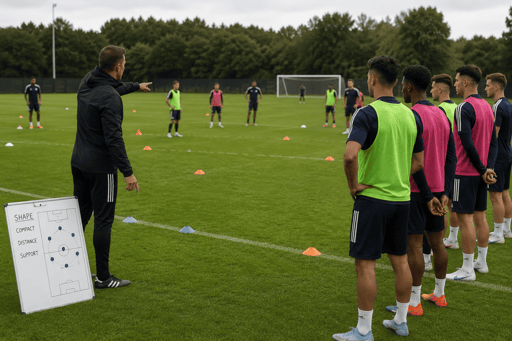
Complete Futsal Management Guide for Modern Coaches
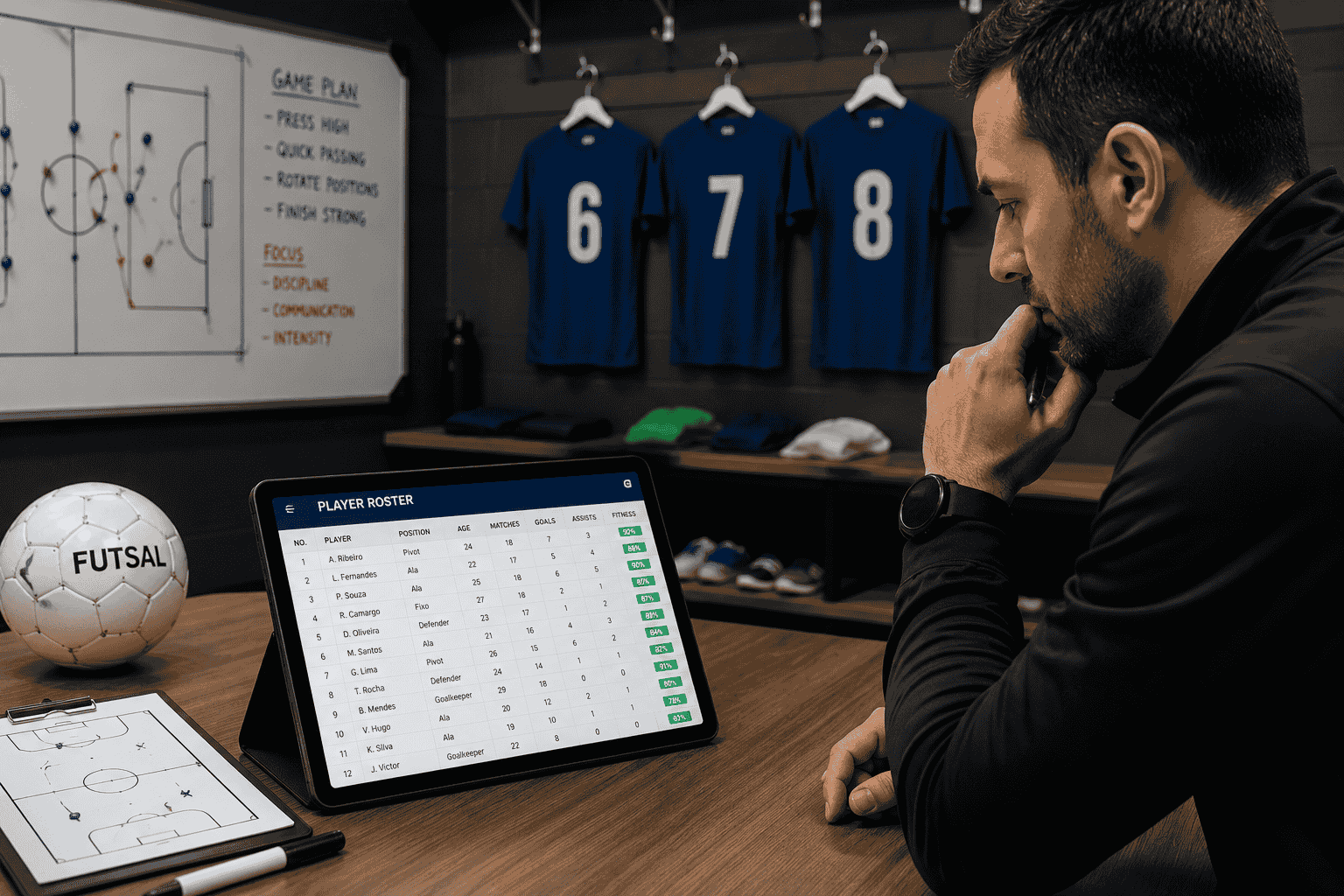
Running a successful futsal team involves much more than organising training sessions and selecting players for match day. Behind every well-performing team is an effective management system that keeps players organised, schedules on track, and communication flowing smoothly.
Whether you're coaching a youth squad, an amateur club, or a competitive futsal team, strong futsal management practices can make the difference between constant administrative headaches and a team that consistently performs at its best.
In this guide, we'll explore everything you need to know about managing a futsal team effectively, from scheduling and player management to communication, analytics, and performance tracking.
What Is Futsal Management?
Futsal management refers to the processes, tools, and strategies used to organise and oversee a futsal team. It includes both administrative and sporting responsibilities, such as:
Planning training sessions
Managing player availability
Organising match schedules
Tracking attendance
Monitoring player performance
Communicating with team members
Analysing match statistics
Managing season objectives
Effective futsal team management allows coaches and team administrators to spend less time on logistics and more time developing players and improving results.
Why Effective Team Management Matters
Many coaches underestimate how much time is spent on non-coaching tasks. Common challenges include:
Creating training schedules
Sending reminders to players
Tracking attendance
Managing match-day rosters
Recording player statistics
Coordinating tournaments
As teams grow, spreadsheets, group chats, and manual processes quickly become difficult to manage.
Strong futsal management helps teams:
Improve organization
Reduce administrative workload
Increase player accountability
Enhance communication
Make better decisions using data
Create a more professional environment
Ultimately, better management leads to better performance on the court.
Building a Structured Training Program
Training is the foundation of every successful futsal team. Without proper planning, sessions can become repetitive, inefficient, and disconnected from long-term goals.
A well-managed training program should include:
Training Element | Purpose |
Warm-up | Injury prevention and preparation |
Technical Drills | Improve ball control and skills |
Tactical Exercises | Develop team strategies |
Match Simulations | Practice game situations |
Cool-down | Recovery and evaluation |
Set Clear Objectives
Every training session should have a specific purpose. Examples include:
Improving defensive organisation
Developing pressing systems
Enhancing passing accuracy
Practising set pieces
Increasing game tempo
When objectives are clearly defined, player development becomes more measurable and consistent.
Managing Your Player Roster
One of the most important aspects of futsal team management is maintaining an organised player database. Coaches should track:
Contact information
Player positions
Match appearances
Attendance records
Performance statistics
Injury history
Development goals
Having all player information in one place makes decision-making faster and more objective.
Evaluating Player Performance
Selection decisions should be based on more than instinct. Consider tracking:
Training attendance
Match ratings
Goals scored
Assists
Defensive contributions
Fitness levels
Consistent data collection helps identify trends and supports fair squad selection.
Match Planning and Preparation
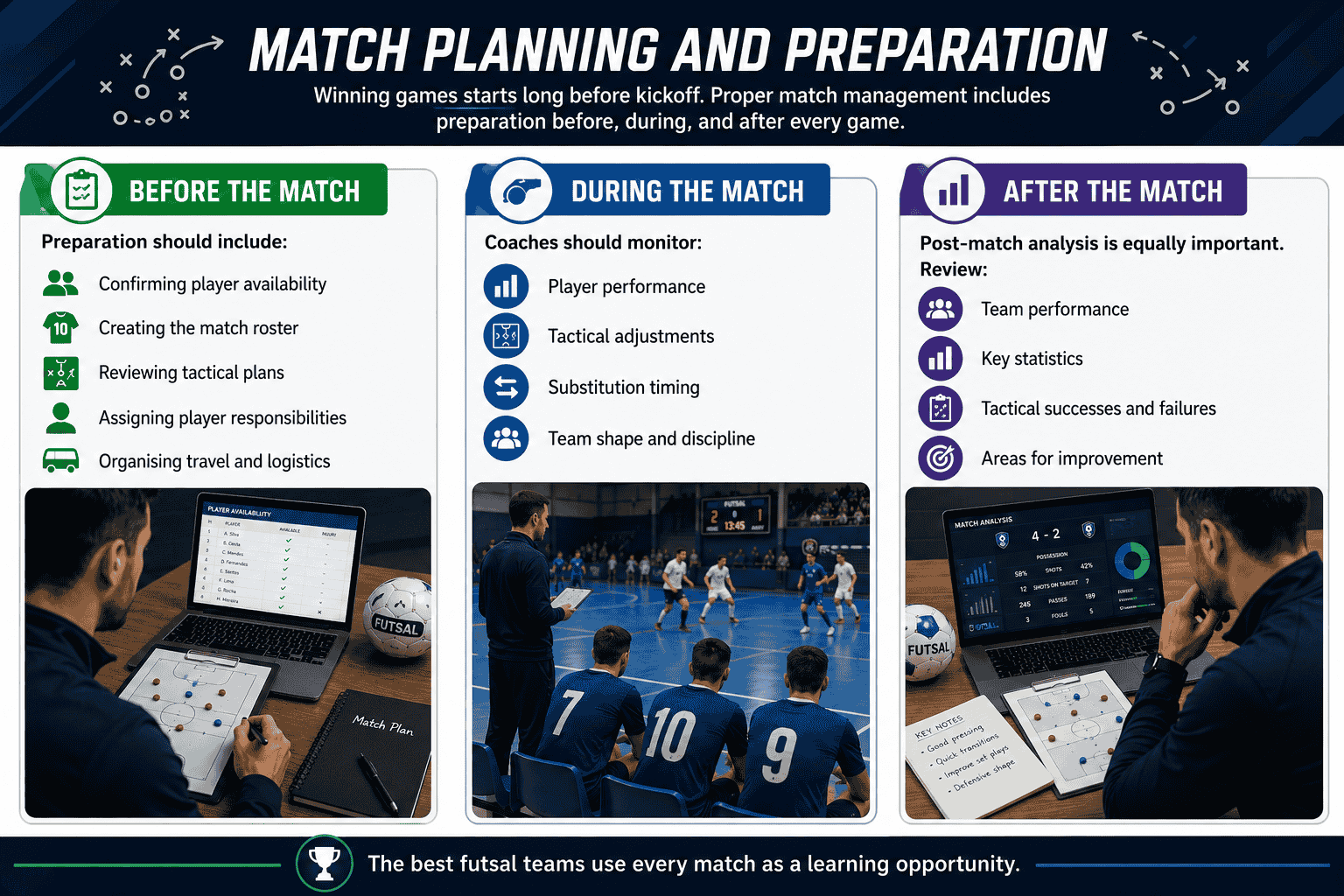
Winning games starts long before kickoff. Proper match management includes preparation before, during, and after every game.
Before the Match
Preparation should include:
Confirming player availability
Creating the match roster
Reviewing tactical plans
Assigning player responsibilities
Organising travel and logistics
During the Match
Coaches should monitor:
Player performance
Tactical adjustments
Substitution timing
Team shape and discipline
After the Match
Post-match analysis is equally important. Review:
Team performance
Key statistics
Tactical successes and failures
Areas for improvement
The best futsal teams use every match as a learning opportunity.
The Importance of Team Communication
Poor communication is one of the most common challenges in sports management. Players may miss updates, forget training times, or fail to confirm availability.
A centralised communication system helps keep everyone aligned. Effective communication should allow coaches to:
Send instant announcements
Share schedules
Confirm attendance
Distribute tactical information
Communicate match details
When everyone receives the same information at the same time, confusion is minimised and professionalism increases.
Using Data and Analytics in Futsal Management
Modern sports increasingly rely on data to improve performance. Even basic statistics can provide valuable insights into team development.
Useful metrics include:
Goals
Assists
Shots on target
Successful passes
Defensive actions
Minutes played
Attendance rates
Tracking these numbers over time allows coaches to make evidence-based decisions rather than relying solely on observation.
Identifying Trends
Performance data can help answer important questions:
Which players are improving most rapidly?
Which lineups perform best together?
Are training sessions producing results?
Which tactical systems are most effective?
Data-driven coaching often leads to better long-term outcomes.
Attendance Management and Player Accountability
Consistent attendance is essential for player development and team cohesion. Without proper attendance tracking, coaches may struggle to identify commitment issues.
Important attendance metrics include:
Training participation
Match availability
Late arrivals
Absence reasons
Monitoring attendance creates accountability and helps establish team standards.
Managing Workload and Preventing Injuries
Overtraining can negatively impact player performance and increase injury risk. Effective futsal management includes monitoring player workload throughout the season.
Factors to track include:
Number of training sessions
Match frequency
Session intensity
Recovery periods
Balancing workload ensures players remain healthy and available when it matters most.
Supporting Long-Term Player Development
Particularly in youth futsal, player development should take priority over short-term results.
Focus on:
Technical improvement
Tactical understanding
Physical development
Mental resilience
Healthy training habits
A structured management system helps support sustainable growth.
Leveraging Technology for Better Team Management
Technology has transformed how sports teams operate.
Modern futsal management software allows coaches to manage every aspect of their team from a single platform.
Features often include:
Training schedules
Attendance tracking
Match management
Player statistics
Team communication
Performance analytics
Instead of juggling spreadsheets, messaging apps, and paper records, coaches can centralise operations and save valuable time.
Common Futsal Management Mistakes
Even experienced coaches make management mistakes that can impact team performance.
Lack of Long-Term Planning. Managing week to week without a seasonal strategy often leads to inconsistent results.
Poor Communication. Important information can easily be missed when communication channels are fragmented.
Ignoring Data. Without tracking performance, it's difficult to measure progress objectively.
Administrative Overload. Spending too much time on logistics reduces time available for coaching and player development.
Inconsistent Processes. Teams perform better when schedules, expectations, and procedures are standardised.
Best Practices for Successful Futsal Management
To build a well-organised and competitive futsal team, follow these best practices:
Plan your season.
Maintain accurate player records.
Track attendance consistently.
Use performance data to guide decisions.
Establish clear communication channels.
Monitor player workload and recovery.
Conduct regular match reviews.
Utilise technology to streamline operations.
Set measurable team goals.
Continuously evaluate and improve your processes.
These habits create a professional environment where players and coaches can focus on performance and development.
Conclusion
Successful futsal management goes far beyond organising training sessions and selecting lineups. Today's coaches and team administrators must effectively manage schedules, communication, attendance, player development, and performance analytics.
The more organised your team's operations become, the more time you can dedicate to coaching, strategy, and helping players reach their potential.
By implementing structured management processes and leveraging modern tools, futsal teams can reduce administrative burden, improve accountability, and create an environment that supports long-term success both on and off the court.
As futsal continues to grow worldwide, teams that embrace efficient management practices will gain a significant competitive advantage.
Frequently Asked Questions
What is futsal management?
Futsal management refers to the organisation and administration of a futsal team, including scheduling training sessions, managing player availability, tracking performance, handling communication, and preparing for matches and tournaments.
Why is futsal management important?
Effective futsal management helps coaches save time, improve team organisation, increase player accountability, and make better decisions using data. Well-managed teams are often more consistent and successful on the court.
What features should futsal management software include?
The best futsal management software should provide attendance tracking, match scheduling, team communication tools, player performance tracking, training management, and analytics dashboards to simplify team operations.
How can coaches improve player performance tracking?
Coaches can track key metrics such as goals, assists, minutes played, attendance, and training participation. Monitoring these statistics over time helps identify strengths, weaknesses, and development opportunities.
How does attendance tracking benefit a futsal team?
Attendance tracking helps coaches monitor commitment levels, identify recurring absences, and maintain accountability. Consistent participation is essential for player development and team cohesion.
What is the best way to communicate with a futsal team?
Using a centralised team communication platform ensures players receive training schedules, match information, and important updates in one place, reducing confusion and missed messages.
Can futsal management software help reduce administrative work?
Yes. Futsal management software automates many administrative tasks such as scheduling, attendance tracking, roster management, and communication, allowing coaches to focus more on player development and match preparation.
What should futsal clubs look for in a team management platform?
A futsal club should look for a platform that combines scheduling, communication, attendance management, player statistics, match planning, and performance analytics in a single system.
How can analytics improve futsal team management?
Analytics provide objective insights into player and team performance. Coaches can use data to evaluate tactics, manage workloads, track development, and make more informed decisions throughout the season.
What are the biggest challenges in managing a futsal team?
Common challenges include managing schedules, tracking attendance, maintaining communication, organising player information, and balancing administrative responsibilities with coaching duties. Using a dedicated futsal management platform can help overcome these challenges.