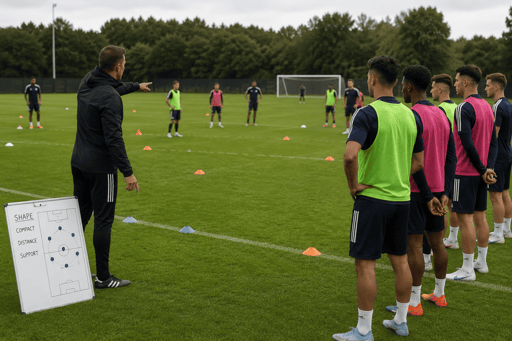
How to Start a Youth Football Team: A Complete Step-by-Step Guide

⏱ 12 min read 📋 10-step checklist
So you want to start a youth football team. Maybe your kid just started playing and there's no local option that feels right. Maybe you're a coach tired of borrowing someone else's program. Or maybe your community simply needs a place for young players to learn the game. Whatever brought you here, building a youth football program from the ground up is one of the most rewarding things you can do. And also one of the most logistically messy, at least at the start.
This guide covers everything involved in starting a youth football team, from paperwork to your first match day, whether you're launching an 11-a-side club or a little league football program for six-year-olds. It's written from the same operational playbook we use with the hundreds of grassroots clubs running on KickPilot, so the steps below reflect what actually works week to week, not just what looks good on a checklist.
Quick Answer: The 10 Steps to Start a Youth Football Team
If you only have a minute, here's the short version. Each step is covered in depth below.
Define your team — age group, format, and competitive level
Handle legal basics — registration, insurance, code of conduct
Secure a field — a consistent home for training and matches
Recruit coaches and volunteers — with background checks in place
Recruit players and parents — flyers, schools, social media, trial sessions
Get equipment sorted — balls, cones, bibs, kit, first-aid
Build a season schedule — training, fixtures, breaks
Set up payments — subs structure and a simple budget
Put admin systems in place early — scheduling, payments, communication
Launch and adjust — gather feedback, refine, repeat next season
Step 1: Decide What Kind of Team You're Building
Before you register anything, get specific about what you're actually setting up. Setting up a youth football team looks very different depending on the age group, format, and level of competition you have in mind.
Questions to answer early:
Age range — Are you coaching U8s, U12s, or a mixed junior program with several age bands?
Format — 5-a-side, 7-a-side, 9-a-side, or full 11v11?
Competitive level — Recreational and inclusive or a pathway toward a competitive league?
Season structure — Year-round club or a single little league football team for one season?
Getting this right up front saves you from having to restructure everything three months in, once you already have players signed up.
Step 2: Handle the Legal and Administrative Basics
This is the unglamorous part of setting up a junior football club, but skipping it causes problems later. At a minimum, you'll typically need to:
Register your team or club with your local or national football association
Decide on a legal structure (many youth clubs register as nonprofits or community organisations)
Get liability insurance for players, coaches, and volunteers
Set up a bank account separate from any personal finances
Draft a simple code of conduct for players, parents, and coaches
If you're starting your own youth football team independently rather than joining an existing league, check what affiliation options exist nearby. National federations and organisations like US Youth Soccer run grassroots or "junior section" pathways that give you access to referees, insurance frameworks, and competitions without reinventing the wheel.
Step 3: Find a Home Field and Training Space
Every youth team needs a reliable place to train and play. Reach out to:
Local schools with underused fields
City or county parks and recreation departments
Community sports complexes
Nearby clubs that might share pitch time
Consistency matters here. Parents and players are far more likely to commit when training happens at the same place and time each week rather than bouncing between venues.
Step 4: Recruit Coaches and Volunteers
You can't run a program alone, and honestly, you shouldn't try to. Whether you're making a youth football team from scratch or expanding an existing one, you'll need:
Head coaches for each age group
Assistant coaches to manage larger squads
Team managers to handle communication, scheduling, and admin
Volunteers for matchday logistics — setup, first aid, refreshments
Make sure every adult working directly with children goes through a background check where required. This isn't optional if you want parents to trust the program with their kids.
Step 5: Recruit Players (and Their Parents)
Once the structural pieces are in place, it's time to fill the roster. Effective ways to get the word out:
Flyers and posters at local schools
Social media groups for parents in your area
Partnerships with PE teachers or school sports coordinators
Open "come try it" sessions with no commitment required
Word of mouth from your first handful of families — this is usually your best channel
Be upfront with parents about costs, schedules, and expectations from day one. Clear communication now prevents confusion (and drop-off) later.
Step 6: Get Your Equipment and Kit Sorted
You don't need a huge budget to get moving, but you do need the essentials:
Balls (age-appropriate sizes)
Cones, bibs, and portable goals for training
A team kit, or at least matching shirts for matches
A basic first-aid kit for every session
Equipment storage that's easy for coaches to transport
Many programs start with a modest kit list and grow their inventory as membership fees and sponsorships come in.
Step 7: Build Your Season Schedule
Running a youth football team week to week comes down to good planning. Map out:
A training schedule (typically 1-2 sessions per week for younger age groups)
Match fixtures, whether through a league or friendlies you arrange yourself
Holiday breaks and blackout dates
Tournament or festival opportunities for extra match experience
Publish the schedule early and keep it visible. Nothing frustrates parents more than last-minute changes they only hear about through a chain of texts.
Once the calendar is set, the next question is what you actually do with your training time. If you're planning your first sessions, our guide to football warm-up drills is a good starting point for structuring the first 10-15 minutes of every practice safely and productively.
Step 8: Set Up Payments and Club Finances
Youth football isn't free to run: fields, insurance, kit, and referee fees all add up. Decide on:
A membership or subs structure (monthly, seasonal, or annual)
How you'll collect payments and track who's paid
A simple budget for the season covering pitch hire, equipment, and admin costs
Whether you'll pursue local sponsorships to offset costs
Step 9: Put Systems in Place Before You Need Them
Here's the part that separates clubs that grow smoothly from ones that burn out their volunteers by October: having a system for the day-to-day admin before the season starts, not after things get chaotic.
This is where a tool like KickPilot earns its keep. Instead of juggling a WhatsApp group, a spreadsheet, and a folder of paper forms, KickPilot gives your whole club one place to manage:
Schedules — training and matches in one shared calendar, so parents always know what's next
Payments — real-time subs tracking, so you can see at a glance who's paid and who hasn't
Player profiles — stats, attendance, and health or availability info, all searchable
Lineups — a drag-and-drop pitch editor for 11v11 down to 6v6 and futsal formats
Communication — a private portal for players and parents, so updates land where people will actually see them
If you're setting up a junior football team or managing several age groups under one club, KickPilot also lets you run multiple squads — First Team, U-12s, U-16s, whatever your structure looks like — from a single dashboard. Everyone gets the view that's relevant to them: coaches see the full squad, players see their own stats, and parents see schedules and payments without extra noise.
KickPilot has a free-forever plan for smaller teams, which makes it a low-risk way to get organised from week one rather than retrofitting a system once things already feel unmanageable.
Step 10: Launch, Learn, and Adjust
Your first season won't be perfect, and it doesn't need to be. What matters is:
Gathering feedback from coaches and parents after the first few weeks
Being willing to adjust training days, formats, or communication methods
Celebrating small wins — first goal scored, first clean sheet, first team photo
Documenting what worked so that next season is easier to plan
Building a youth football program from the ground up is a marathon, not a sprint. The clubs that last aren't the ones with the biggest budgets — they're the ones with clear systems, reliable communication, and coaches and parents who feel like they're part of something worth showing up for.
Final Thoughts
Whether you're figuring out how to start a little league football team for the first time or formalizing a group of kids who've been kicking a ball around the local park for months, the path is the same: get your admin sorted, find your people, build good habits early, and use the right tools so the behind-the-scenes work doesn't swallow the time you'd rather spend coaching.