4-3-3 Formation Guide: Modern Tactical Breakdown
The 4-3-3 formation remains one of the most influential systems in modern football. From Pep Guardiola’s positional play to high-intensity pressing sides across Europe, the shape continues to dominate because it balances attacking width, midfield control, and defensive structure.
Whether you coach youth football, manage an amateur side, or simply want to understand the game better, learning the principles behind the 4-3-3 football formation can completely change how you see tactical football.
In this guide, we’ll break down how the system works, the key player roles, attacking patterns, defensive responsibilities, strengths, weaknesses, and the modern tactical variations that make the 4-3-3 so effective.
Read also: Football Formations Guide: Understanding Tactics, Shapes, and Winning Setups
What Is the 4-3-3 Formation?
The 4-3-3 formation uses:
4 defenders
3 midfielders
3 forwards
The basic structure usually includes:
Two center backs
Two fullbacks
One defensive midfielder
Two central midfielders
One striker
Two wingers
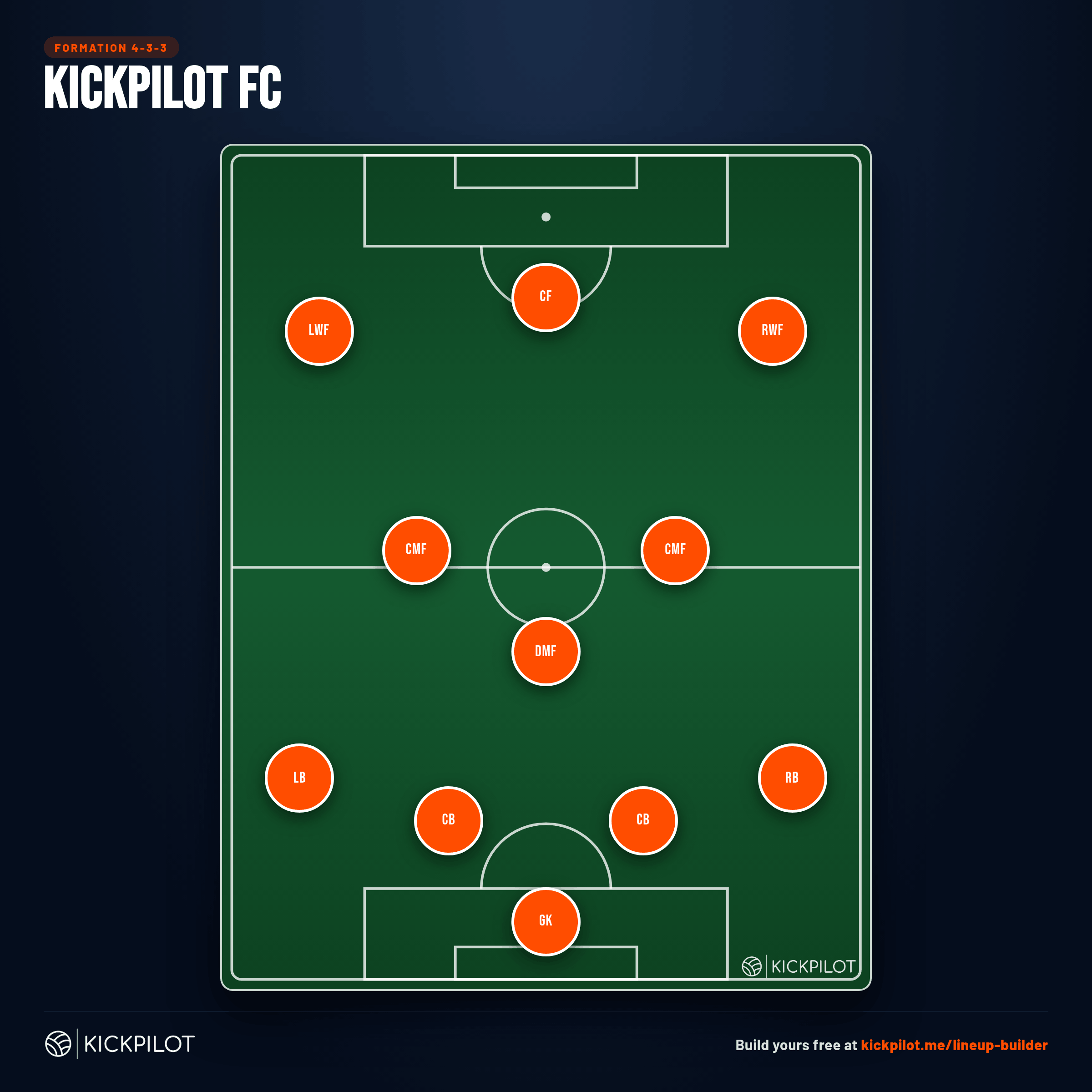
The shape creates natural triangles across the pitch, helping teams maintain possession, progress the ball, and press aggressively.
One reason the 4-3-3 football system became so popular is its flexibility. Teams can shift fluidly between attacking and defending without making substitutions or major structural changes.
4-3-3 Formation Positions Explained
Understanding the individual roles is essential to mastering the system.
Goalkeeper
Modern 4-3-3 teams often rely on a sweeper keeper. The goalkeeper must:
Play comfortably with the ball
Support buildup play
Cover space behind a high defensive line
Distribution becomes a major tactical weapon in this system.
Center Backs
The central defenders must defend large spaces, especially when the team presses high.
Key responsibilities include:
Progressive passing
Breaking opposition lines
Defending transitions
Maintaining composure under pressure
Ball-playing center backs are especially valuable in the modern 4-3-3 formation.
Fullbacks
Fullbacks are critical in both attack and defense.
In possession, they often:
Provide width
Overlap wingers
Create overloads
Defensively, they:
Track wide attackers
Protect transition spaces
Support pressing traps
Some modern systems even invert fullbacks into midfield.
Defensive Midfielder
The holding midfielder is often the tactical anchor of the team.
Responsibilities include:
Screening the defense
Recycling possession
Controlling tempo
Breaking up attacks
This role is vital in maintaining the 4-3-3 defensive shape.
Central Midfielders
The two advanced midfielders connect attack and defense.
They may:
Make forward runs
Press aggressively
Create passing angles
Support wide combinations
In elite systems, these midfielders need excellent stamina and tactical intelligence.
Wingers
Wide forwards are central to the 4-3-3 attack formation.
Their tasks include:
Stretching defenses
Attacking isolated defenders
Cutting inside to shoot
Pressing opposition fullbacks
Modern wingers often operate as inverted forwards.
Striker
The central striker can function in several ways:
Traditional target man
False nine
Pressing forward
Movement is crucial. The striker often initiates the press and creates space for wide attackers.
How the 4-3-3 Formation Works in Attack
The biggest strength of the 4-3-3 formation attacking structure is width and spacing.
Teams naturally occupy all five attacking lanes:
Left wing
Left half-space
Central channel
Right half-space
Right wing
This creates passing options everywhere on the pitch.
Width Creates Space
Wingers stay wide to stretch the opposition back line. This opens central spaces for midfield runners and attacking combinations.
Fullbacks may overlap to create:
2v1 situations
Crossing opportunities
Positional overloads
Midfield Triangles
The midfield triangle is one of the defining features of 4-3-3 tactics.
Triangles allow:
Quick passing combinations
Press resistance
Ball circulation
Controlled possession
This is why possession-heavy teams often favor the system.
High Pressing
The front three can press aggressively without sacrificing shape.
The striker closes central passing lanes while the wingers force play wide. Midfielders then step up to compress space.
This coordinated pressing structure is one reason the 4-3-3 football formation works so well in modern football.
Positional Rotation
Advanced 4-3-3 teams constantly rotate positions.
Examples include:
Wingers moving centrally
fullbacks underlapping
Midfielders drifting wide
False nines dropping deep
These movements disrupt defensive marking schemes and create confusion.
4-3-3 Defensive Shape Explained
Without possession, the 4-3-3 defensive shape becomes compact and organized.
Most teams defend in one of two ways:
1. High Pressing 4-3-3
The front three stay high and pressure defenders aggressively.
Benefits:
Forces mistakes
Wins possession in dangerous areas
Maintains territorial dominance
Risks:
Leaves space behind the press
Requires excellent fitness
Vulnerable to direct balls
2. Mid-Block or Compact 4-1-4-1
Many teams transform into a 4-1-4-1 while defending.
The wingers drop deeper alongside midfielders to create compactness.
This version of the 4-3-3 formation defending structure helps:
Protect central spaces
Reduce passing lanes
Force opponents wide
The defensive midfielder becomes especially important here.
4-3-3 Defensive Tactics
Successful 4-3-3 defensive tactics rely on coordination rather than individual defending.
Compactness
The team must stay vertically and horizontally compact. If the front line presses without midfield support, gaps appear immediately.
Pressing Triggers
Top teams use pressing triggers such as:
Poor first touches
Backward passes
Wide passes near the sideline
Slow center back circulation
Once triggered, the entire shape moves aggressively.
Defensive Transitions
One of the most important elements of modern 4-3-3 tactics is counter-pressing.
After losing possession, players immediately try to recover the ball before the opponent can transition.
This helps:
Prevent counterattacks
Maintain pressure
Keep territorial control
Strengths of the 4-3-3 Formation
The popularity of the 4-3-3 formation comes from its versatility.
Excellent Width
Natural width stretches defenses and creates attacking opportunities.
Strong Midfield Presence
Three midfielders help control possession and dominate central areas.
Effective Pressing Structure
The front three can pressure opposition buildup efficiently.
Tactical Flexibility
Teams can easily transition into:
4-1-4-1
4-2-3-1
3-2-5
2-3-5
during different phases of play.
Ideal for Possession Football
The formation supports:
Passing triangles
Rotational movement
Positional play
Ball retention
4-3-3 Formation Weakness
No tactical setup is perfect. Understanding the 4-3-3 formation's weakness areas is essential.
Vulnerable Wide Spaces
Advanced fullbacks can leave space behind them during transitions.
Opponents may exploit these channels with quick counters.
Requires High Fitness Levels
The system demands:
Constant movement
Intense pressing
Recovery runs
Tactical discipline
Teams without athletic midfielders often struggle.
Isolated Defensive Midfielder
If central midfielders push too high, the holding midfielder may become isolated.
This creates dangerous gaps between defense and midfield.
Vulnerability Against Double Pivots
Some 4-2-3-1 systems overload central midfield areas and outnumber the single defensive midfielder.
Modern Variations of the 4-3-3 Formation
Modern football constantly evolves, and the 4-3-3 formation tactics have adapted with it.
False Nine 4-3-3
The striker drops deeper into midfield to:
Create overloads
Drag center backs out of position
Open space for wingers
This variation became famous under Guardiola’s Barcelona.
Inverted Fullback System
Fullbacks move centrally during buildup instead of overlapping wide. Benefits include:
Extra midfield control
Better rest defense
Improved counter-pressing
Direct Transition 4-3-3
Some teams use the shape for fast counterattacks instead of possession. This style focuses on:
Vertical passing
Pace in wide areas
Rapid transitions
Best Teams That Use the 4-3-3
Several elite clubs and national teams rely heavily on the system. Examples include:
FC Barcelona
Manchester City F.C.
Liverpool F.C.
Real Madrid CF
Each interprets the shape differently, but the core principles remain similar.
How Coaches Can Implement the 4-3-3
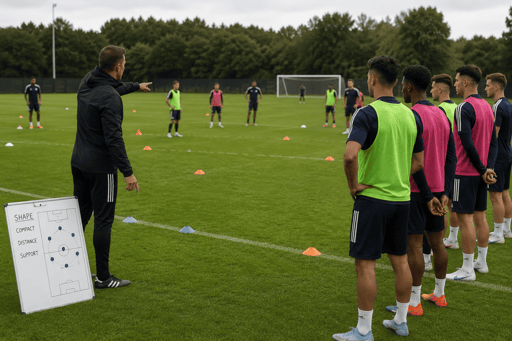
Coaches should focus on teaching principles rather than rigid positioning. Key coaching points:
Maintain width in possession
Create midfield triangles
Press together as a unit
Transition quickly after losing possession
Encourage positional awareness
Small-sided games work especially well for developing 4-3-3 football understanding.
Build Your Own 4-3-3 Tactics Visually
If you want to experiment with your own 4-3-3 formation tactics, creating visual lineups and tactical boards can make a huge difference.
The Kickpilot Lineup Builder allows coaches, analysts, and players to quickly design formations, test tactical ideas, and visualize movement patterns for training sessions or match preparation.
It’s especially useful for:
Creating tactical boards
Planning pressing structures
Building attacking patterns
Explaining player responsibilities
Sharing formations with teams
Final Thoughts
The 4-3-3 formation continues to shape modern football because it offers balance, flexibility, and tactical control.
Whether focused on possession, pressing, or transitions, the system provides a strong framework for modern teams. Success ultimately depends on player profiles, coaching clarity, and tactical discipline.
Understanding the details behind the 4-3-3 attack formation, defensive organization, pressing structure, and positional responsibilities helps coaches and players use the system more effectively.
As football evolves, the 4-3-3 will likely remain one of the sport’s defining tactical systems for years to come.
FAQ
Is a 4-3-3 a good formation?
Yes, the 4-3-3 formation is considered one of the best systems in modern football because it provides balance between attack and defense. It allows teams to maintain width, control midfield possession, and press effectively.
The formation is especially effective for teams that want to:
Play possession-based football
Press aggressively
Create wide attacking overloads
Control the central midfield areas
However, success depends on having disciplined midfielders, energetic fullbacks, and coordinated pressing. Without the right player profiles, the system can become vulnerable during defensive transitions.
Which is better, 4-3-3 or 4-2-3-1?
Neither system is universally better. It depends on the team’s style, players, and tactical goals.
The 4-3-3 football formation is usually better for:
High pressing
Positional play
Midfield control
Wide attacking football
The 4-2-3-1 is often better for:
Defensive stability
Counterattacking
Protecting the back line with a double pivot
Creating space for a central attacking midfielder
A 4-3-3 attack formation can feel more aggressive and fluid, while the 4-2-3-1 may offer slightly more defensive protection in midfield.
How to defend against a 4-3-3?
To defend against a 4-3-3 formation, teams usually focus on limiting midfield control and stopping wide overloads.
Common strategies include:
Overloading central midfield with a double pivot
Blocking passing lanes into the holding midfielder
Pressing fullbacks aggressively
Forcing play into wide areas
Exploiting space behind attacking fullbacks during transitions
Counterattacking quickly into the channels left by advanced fullbacks is one of the most effective ways to expose a 4-3-3 defensive shape.
A compact defensive organization is essential because the system is designed to stretch opponents horizontally and create space between defensive lines.