Football Tactical Analysis Guide - How to Analyse a Football Game
Most football fans watch the ball. Coaches watch everything else.
They study shape, spacing, pressing triggers, transitions, and player movement long before goals happen. That’s the difference between casual viewing and true football tactical analysis.
The good news is you don’t need a UEFA license to start thinking like a coach. Once you know what to look for, every match becomes easier to understand.
In this guide, you’ll learn how to analyse football matches step by step, including formations, tactics, pressing patterns, and key moments that decide games.
Start With the Bigger Picture
Before diving into details, zoom out.
One of the biggest mistakes beginners make when learning how to analyse football is focusing too much on individual actions. Coaches first analyse team structure.
Ask yourself:
What formation is each team using?
Who controls possession?
Where is space being created?
How aggressive is the press?
Which areas are being overloaded?
These questions immediately reveal the tactical story of the game.
For example, a team lining up in a 4-3-3 may attack very differently from another side using the same shape. One fullback might invert into midfield while the other overlaps high and wide. That’s why football formation analysis is only the starting point, not the full answer.
Step 1: Analyse the Formations
The first step in football match tactical analysis is identifying the formations both teams use in and out of possession.
Common formations include:
4-3-3
4-2-3-1
3-5-2
4-4-2
5-3-2
But formations constantly change during matches.
A team may defend in a compact 4-4-2 and attack in a 3-2-5 shape. Elite coaches train players to shift structures depending on the phase of play.
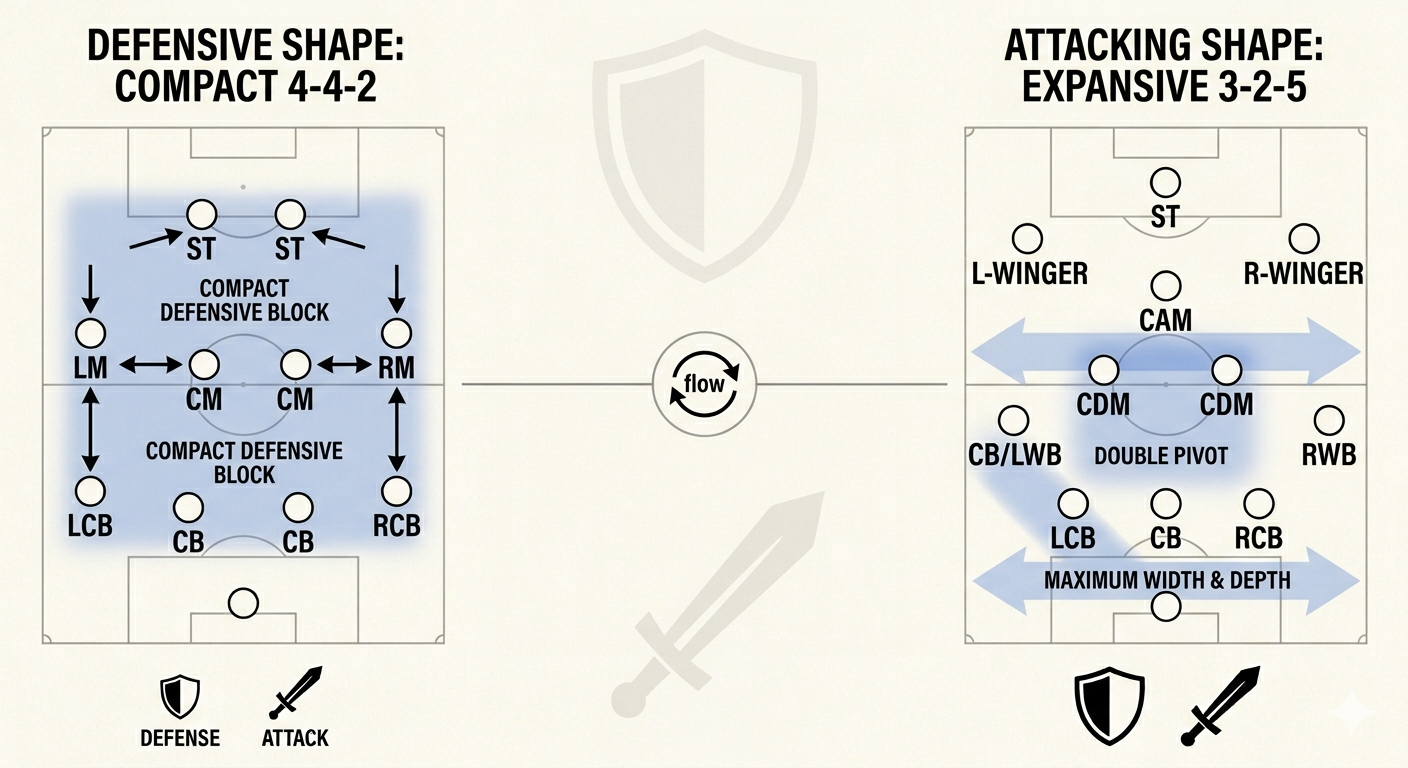
When doing football formation analysis, focus on:
Defensive Shape
Is the team compact?
Are the lines narrow or stretched?
Is the block high, mid, or low?
Midfield Structure
Is there a single pivot or a double pivot?
Who progresses the ball?
Are midfielders rotating positions?
Attacking Shape
How many players occupy the final line?
Are wingers staying wide or cutting inside?
Are fullbacks overlapping?
Watching these patterns helps you understand the team’s intentions instead of just memorising numbers.
Step 2: Study Possession Patterns
Possession is not just about keeping the ball. It’s about controlling space and manipulating opponents.
When learning how to analyse a football game, pay attention to how teams build attacks.
Look for:
Goalkeeper involvement
Centre-back positioning
Passing triangles
Width in buildup
Tempo changes
Strong possession teams often create overloads in certain zones. For example, many modern sides overload midfield to pull defenders centrally before switching play wide.
Ask:
Which player starts the attacks?
Which player breaks lines?
Where does progression happen most often?
This is where football tactical analysis becomes much more interesting than basic stats.
A team may have 65% possession but create very little danger because their buildup lacks penetration.
Step 3: Analyse Pressing and Defensive Structure
Great defensive teams are rarely passive. They defend with organisation and clear triggers.
When analysing pressing, watch for:
When the press begins
Which passing lanes are blocked
How do forwards position themselves
Whether the press is man-oriented or zonal
Some teams press aggressively after losing possession. Others retreat immediately into shape.
A useful way to analyse football matches is by observing defensive transitions. The first five seconds after losing the ball often reveal a coach’s philosophy.
Questions to ask:
Does the team counterpress?
Do midfielders recover quickly?
Are defenders stepping up or dropping deep?
Which areas are intentionally left open?
These details separate elite tactical systems from disorganised defending.
Step 4: Watch Off-the-Ball Movement
The ball attracts attention, but moving away from it usually yields the greatest advantage.
This is one of the most overlooked parts of tactical analysis in football matches.
Watch players who don’t have possession:
Are forwards dragging defenders away?
Are midfielders rotating positions?
Are runners attacking half-spaces?
Is someone constantly creating overloads?
Elite coaches care deeply about spacing.
Good movement stretches defensive structures and creates passing lanes. Poor movement compresses space and kills attacks.
A simple example:
A striker dropping deep may pull a centre-back out of position, creating space for a winger to run behind. The striker never touches the ball, but his movement creates the chance.
That’s tactical football.
Step 5: Analyse Transitions
Modern football is heavily influenced by transition moments.
Many goals happen within seconds of winning or losing possession. That’s why transitions are central to football tactical analysis today.
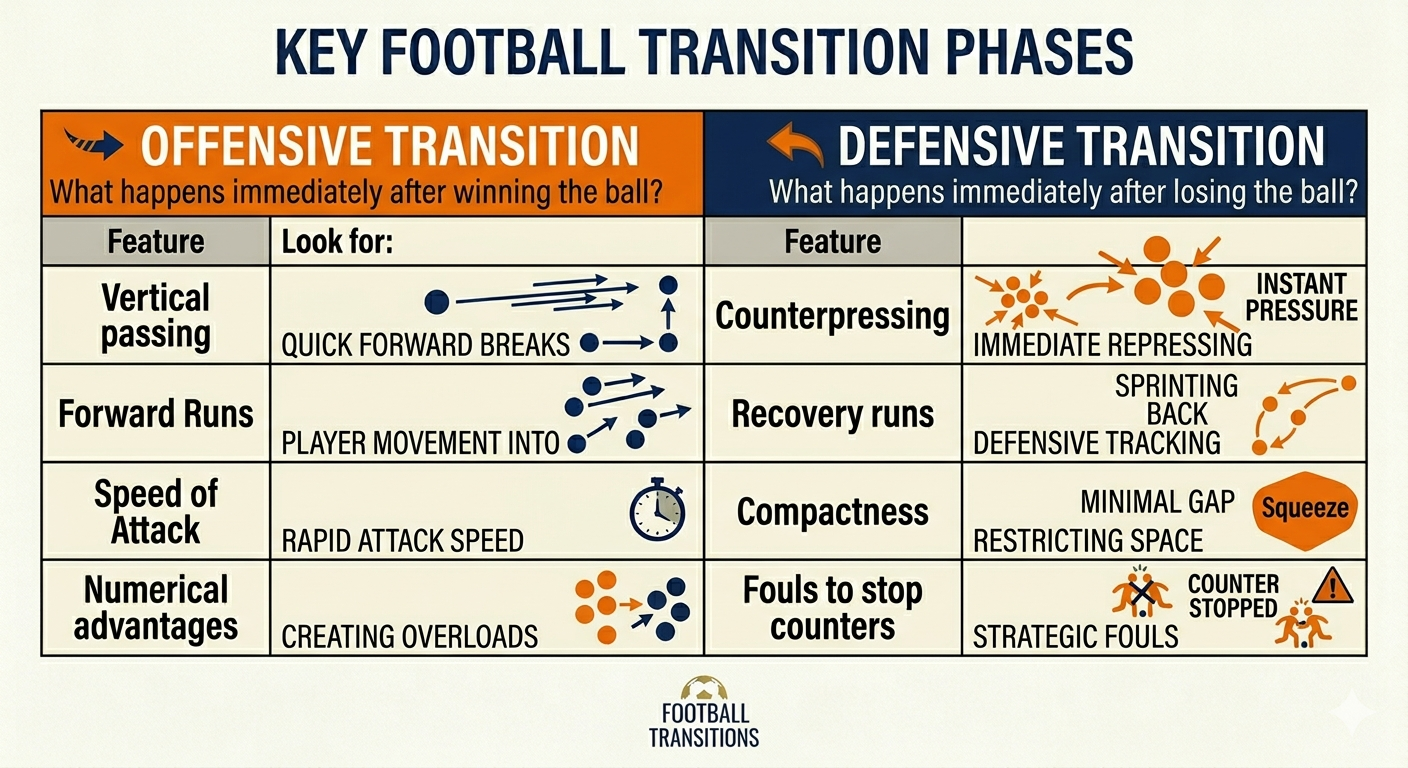
There are two key transition phases:
Offensive Transition
What happens immediately after winning the ball?
Look for:
Vertical passing
Forward runs
Speed of attack
Numerical advantages
Defensive Transition
What happens immediately after losing the ball?
Look for:
Counterpressing
Recovery runs
Compactness
Fouls used to stop counters
Teams that dominate transitions often control matches even without dominating possession.
Step 6: Identify Key Tactical Matchups
Every match contains individual battles that shape the game.
When learning how to analyse football matches, identify which matchups matter most.
Examples include:
A winger attacking a slow fullback
A striker exploiting space behind aggressive defenders
A creative midfielder escaping markers
An overload against a weak defensive side
Top coaches constantly adjust tactics to exploit these advantages.
Sometimes a substitution completely changes the tactical dynamic because it creates a new matchup problem.
Step 7: Use Stats Carefully
Stats help, but context matters more.
Possession percentages, shots, and passing accuracy only tell part of the story.
Useful metrics for football tactical analysis include:
Expected goals (xG)
Progressive passes
Final third entries
PPDA (pressing intensity)
Field tilt
Touches in the penalty area
But numbers should support what you see, not replace it.
For example, a low xG total may still hide dangerous tactical patterns that nearly produced goals.
Always combine video analysis with data.
How Coaches Actually Review Matches
Professional coaches usually analyse games in phases:
Team shape
Build-up patterns
Pressing structure
Transition moments
Chance creation
Individual performance
Set pieces
They often rewatch matches multiple times, focusing on one phase at a time.
If you’re serious about improving your understanding, try watching:
First half live
Second viewing focused only on tactics
The third viewing focused on one team
You’ll notice far more detail each time.
Common Mistakes Beginners Make
When starting football formation analysis, many people:
Follow only the ball
Ignore defensive structure
Focus too much on highlights
Judge tactics only by results
Overreact to possession stats
A team can lose while still executing its tactical plan very well.
Good analysis looks beyond the scoreboard.
Final Thoughts
Learning how to analyse football matches takes time, but it completely changes how you watch the game.
You begin to see:
Why certain formations work
How coaches manipulate space
Why pressing systems succeed or fail
How transitions decide matches
Which tactical adjustments change momentum
The more matches you study, the easier patterns become to recognise.
Start simple. Focus on formations, spacing, pressing, and transitions. Over time, your football tactical analysis skills will become sharper and more detailed.
And once that happens, you’ll never watch football the same way again.
FAQs
Can AI analyse a football game?
Yes. AI can analyse football games by tracking player movement, formations, passing patterns, pressing intensity, and tactical trends. Modern AI tools help coaches, analysts, and fans perform football tactical analysis faster by turning match data into visual insights and performance reports.
What is the best site to analyse football matches?
The best platform depends on your goals. Professional analysts often use tools like Wyscout, Hudl, and StatsBomb for advanced football match tactical analysis. For fans, creators, and teams looking for accessible AI-powered insights and match analysis tools, KickPilot offers an easy way to break down football matches and tactical patterns.
How do coaches analyse football matches?
Coaches analyse matches by studying formations, defensive structure, pressing systems, transitions, player positioning, and chance creation. Most coaches review video footage multiple times while combining tactical observations with performance data and statistics.
What should beginners focus on when learning how to analyse football?
Beginners should start with football formation analysis and basic team structure. Focus on:
Defensive shape
Pressing patterns
Player spacing
Transitions
Off-the-ball movement
Once you understand these areas, football tactical analysis becomes much easier to follow and explain.