4-4-2 Formation Explained: Tactics, Strengths & Weaknesses
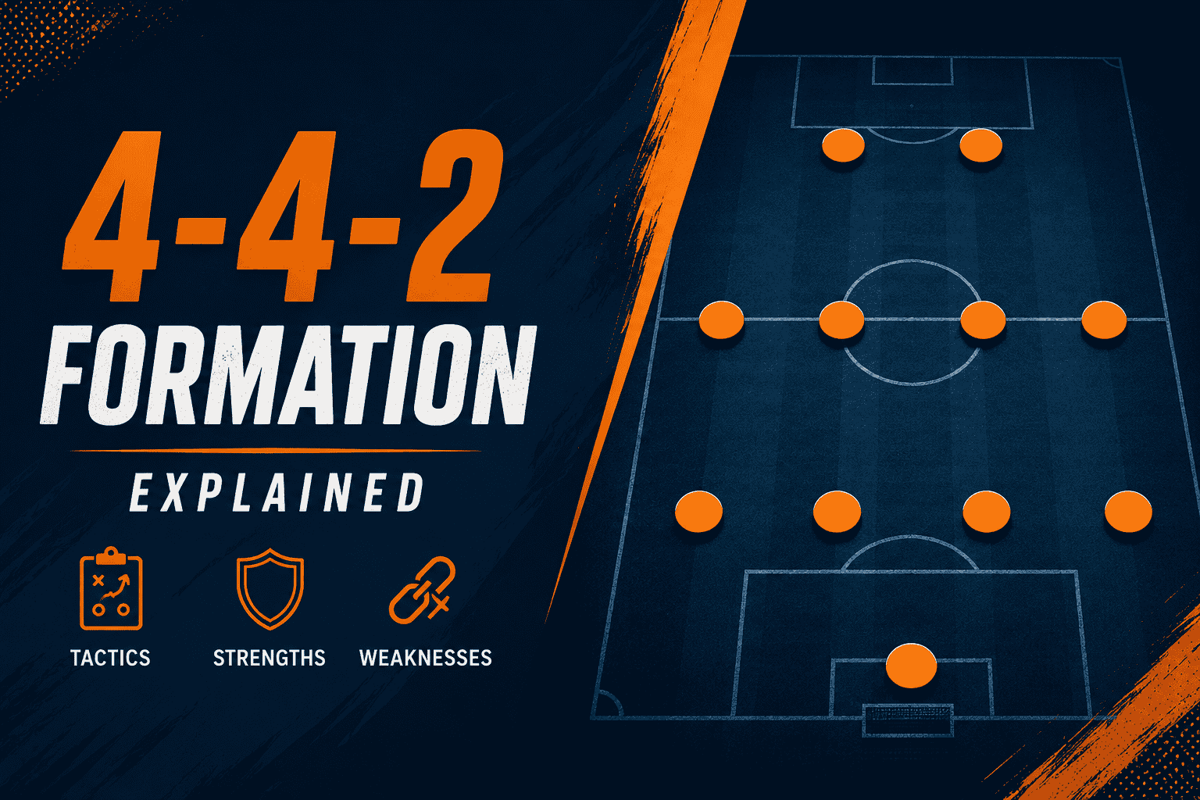
The 4-4-2 formation is one of football’s most famous tactical systems, and honestly, there is a good reason it has survived for so long. It is simple enough for young players to understand, structured enough for coaches to organise quickly, and flexible enough to work in different levels of the game. When people talk about “classic football,” they often picture two banks of four, two strikers up front, wide players running the channels, and central midfielders fighting for control in the middle of the pitch.
But here is the important part: the 4-4-2 is not just an old-school formation. It can still be modern, aggressive, compact, and effective when used properly. Coaches use 4-4-2 tactics to defend in a disciplined mid-block, press with two forwards, attack quickly through the wings, and create partnerships all over the pitch. Like a reliable toolbox, it may not look fancy at first glance, but when you know how to use it, it solves a lot of problems.
For coaches, team managers, and grassroots clubs, the real challenge is not just choosing the shape. The challenge is helping players understand their roles. That is where planning tools can make a big difference. With KickPilot’s Lineup Builder, coaches can easily create, adjust, and share formations like the 4-4-2 before matchday.
What Is the 4-4-2 Formation?
The 4-4-2 formation is built with four defenders, four midfielders, and two forwards. The back line usually includes two centre-backs and two full-backs. The midfield line has two central midfielders and two wide midfielders. The front line has two strikers who work together to press, combine, and attack the box.
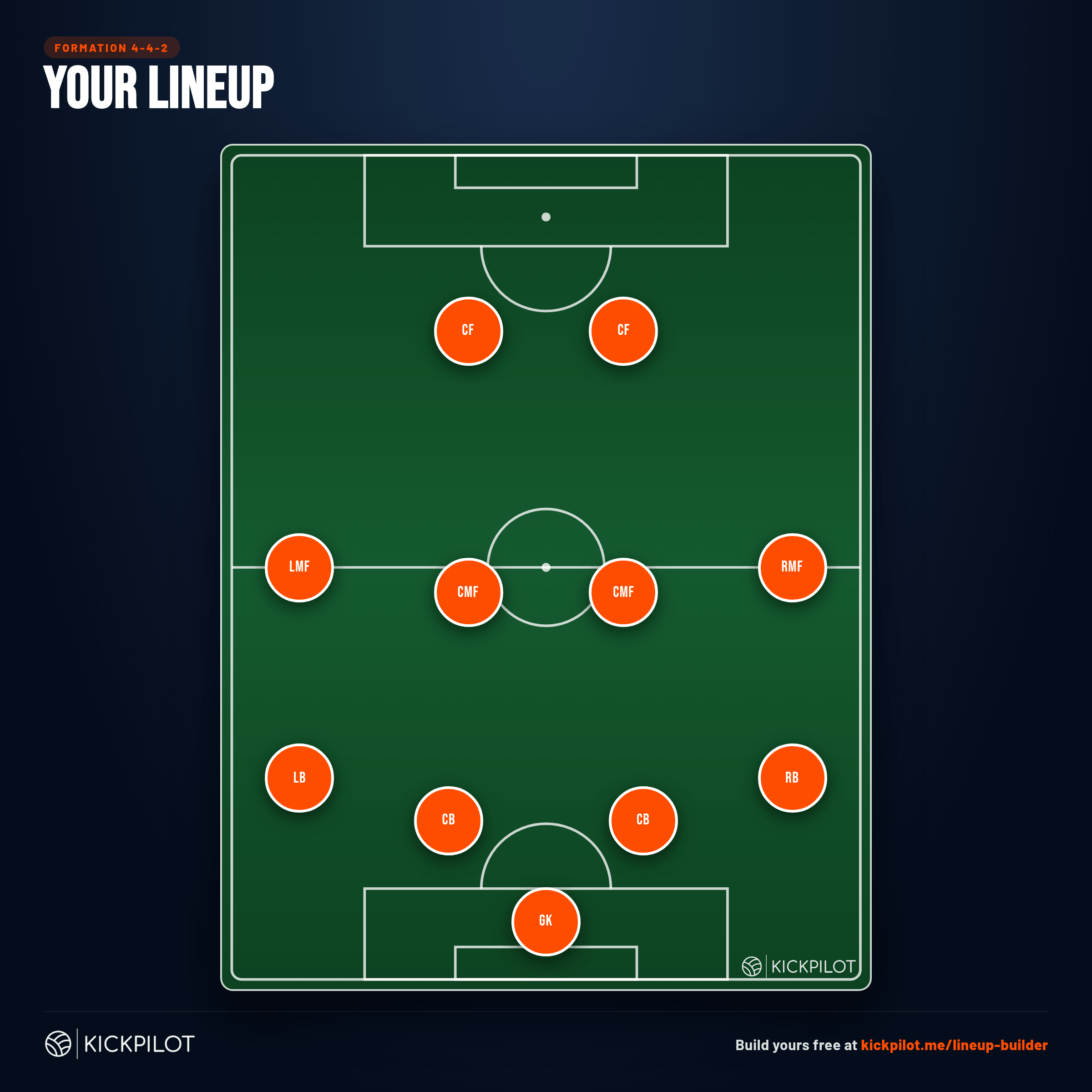
The beauty of the 4-4-2 is its clarity. Everyone can see the structure. Defenders defend, midfielders connect the team, wide players provide width, and the two strikers pose a constant attacking threat. For amateur, youth, and semi-professional teams, this clarity is a huge advantage because players do not need weeks of tactical theory to understand the system.
In 4-4-2 football, the team often forms two compact lines of four when defending. This makes it difficult for opponents to play through the middle. The two strikers can screen passes into midfield, press centre-backs, or stay ready for counter-attacks. When the ball is won, the team can attack quickly through wide areas or play directly into the forwards.
How 4-4-2 Tactics Work
The main idea behind 4-4-2 tactics is balance. The formation gives you defensive numbers, attacking presence, and natural width without asking players to constantly rotate into complicated positions. That does not mean it is basic. A good 4-4-2 can be very sophisticated, especially when the team understands pressing triggers, distances between lines, and how to shift across the pitch together.
Out of possession, the team usually defends in a compact block. The midfield four slides from side to side, the back four protects the penalty area, and the strikers block central passing lanes. If the opponent plays wide, the nearest winger presses, the full-back supports behind, and the rest of the team shifts across like a door closing.
In possession, the 4-4-2 can attack in several ways. A direct team may play early balls into the strikers and fight for second balls. A more technical team may use full-backs and wide midfielders to create overloads on the wings. A counter-attacking team may sit deep, win the ball, and release one striker into space while the other supports underneath.
Strengths of the 4-4-2 Formation
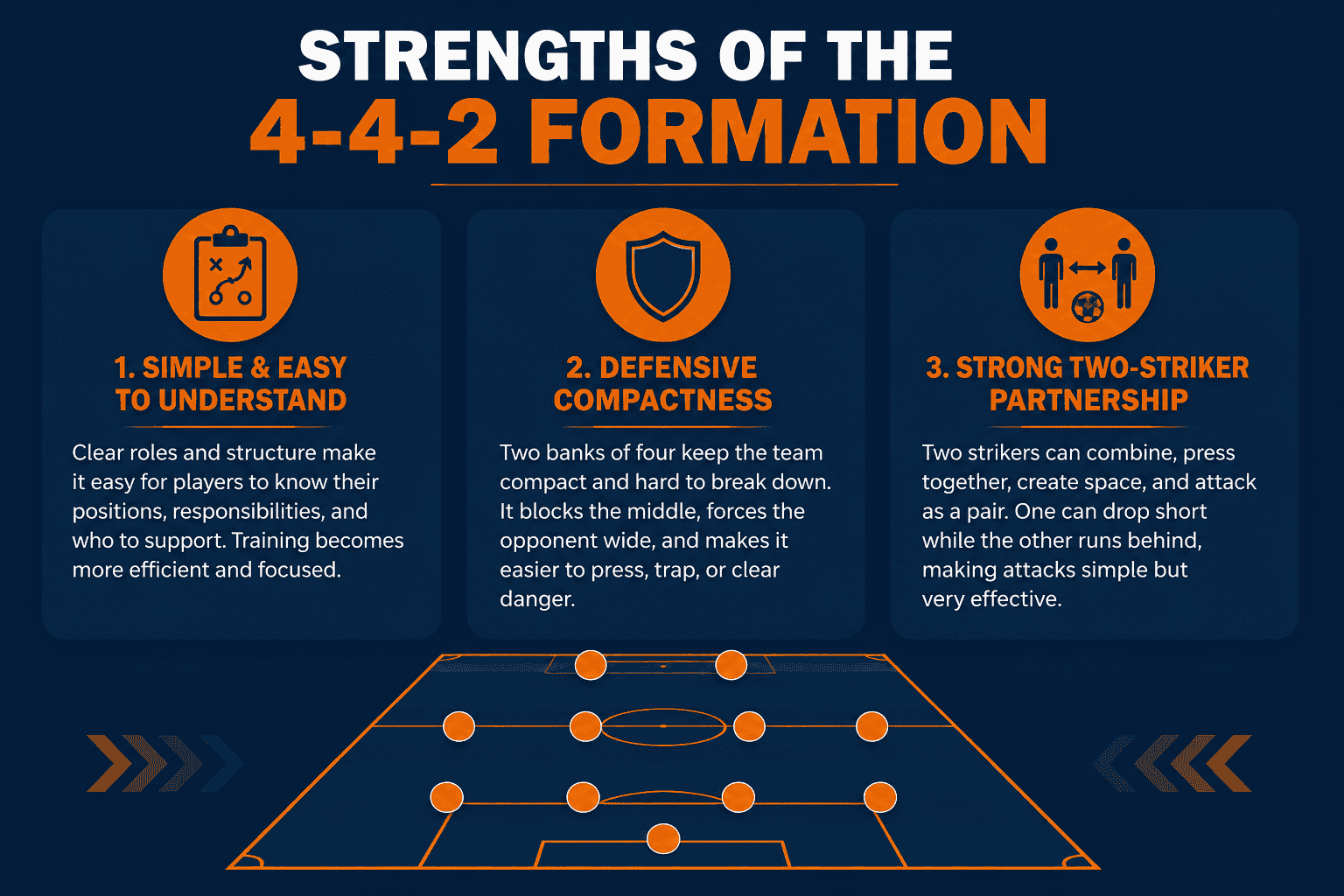
The biggest strength of the 4-4-2 formation is simplicity. Players know where they should be, who they should support, and what spaces they need to protect. For coaches, that makes training easier. You can build sessions around defensive shape, wide attacks, striker partnerships, and compactness without constantly stopping to explain positional rotations.
Another major strength is defensive compactness. Two banks of four can be very hard to break down when the distances are right. The opponent may have the ball, but if they cannot play through the middle, they are often forced wide. From there, the defending team can press, trap, or clear danger more easily.
The two-striker system is also valuable. Many modern formations use only one central forward, which can leave the striker isolated. In a 4-4-2, the forwards can combine, press together, split centre-backs, and attack crosses as a pair. One can drop short while the other runs behind, creating simple but dangerous movements.
Weaknesses of the 4-4-2 Formation
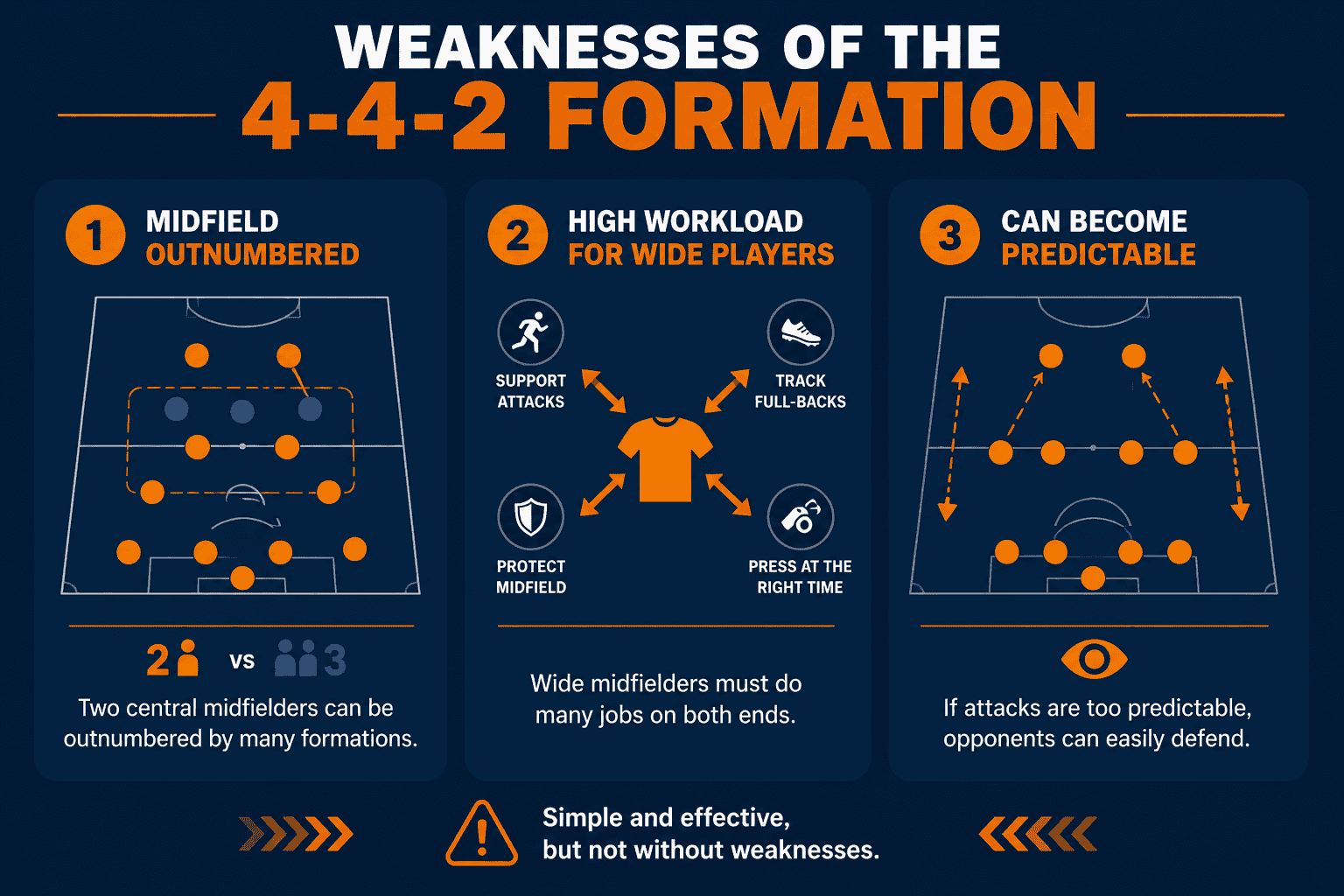
The most common weakness of the 4-4-2 is the midfield battle. Against a 4-3-3, 4-2-3-1, or 3-5-2, the two central midfielders can be outnumbered. This can make it difficult to keep possession, progress the ball, or stop opponents from finding free players between the lines.
Wide players also have a demanding job. They must support attacks, track opposition full-backs, protect central midfield, and press at the right time. If they switch off, the team can become stretched. If they stay too deep, the strikers become isolated. In many ways, the success of a 4-4-2 depends heavily on the discipline and fitness of the wide midfielders.
The formation can also become predictable if the team only attacks down the wings or plays long balls into the strikers. Modern opponents are good at reading patterns. If your 4-4-2 does not include rotations, quick switches of play, or smart striker movement, it can become easy to defend against.
Conclusion
The 4-4-2 formation remains one of football’s most useful tactical systems because it gives teams structure, balance, and clarity. It is easy to understand, strong defensively, dangerous on the counter, and ideal for teams that want two forwards on the pitch. At the same time, it requires discipline, smart midfield positioning, and hardworking wide players.
For coaches, the key is not just choosing the 4-4-2. The key is teaching it properly. Players need to understand distances, pressing triggers, passing options, and how the shape changes during different phases of the game. When those details are coached well, the 4-4-2 is not outdated at all. It is a classic system that still has plenty of life in modern football.
FAQs
What is the 4-4-2 formation in football?
The 4-4-2 formation uses four defenders, four midfielders, and two strikers. It is one of the most traditional and balanced systems in football.
Is the 4-4-2 formation still effective?
Yes, the 4-4-2 can still be effective when coached properly. It works especially well for compact defending, counter-attacking, pressing with two forwards, and creating strong striker partnerships.
What are the main strengths of 4-4-2 tactics?
The main strengths are simplicity, defensive balance, wide attacking options, two forwards, and strong counter-attacking potential.
What are the biggest weaknesses of the 4-4-2?
The main weakness is that the two central midfielders can be outnumbered by teams using three midfielders. Wide players also need excellent fitness and discipline.
Is the 4-4-2 good for youth football?
Yes, the 4-4-2 is excellent for youth football because it teaches basic team shape, defensive responsibility, wide play, and striker partnerships in a simple structure.