Best Football Tactics Explained: The Complete Guide for Coaches in 2026
Football is often described as a simple game, but anyone who has spent time on a training ground knows the truth. The difference between winning and losing rarely comes down to talent alone. It comes down to tactics.
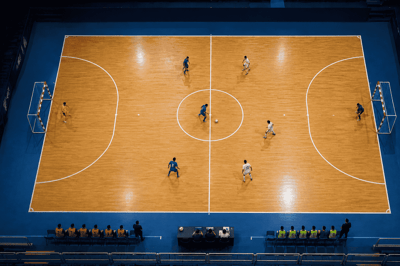
The best teams in the world combine technical quality with intelligent tactical systems. Whether you're coaching a grassroots youth team, a futsal squad, or a competitive football club, understanding modern football tactics is essential for developing players, creating winning game plans, and improving match performance.
Today's game is more tactical than ever. Recent studies of Europe's top leagues show that formations such as 4-3-3, 4-2-3-1, and 3-5-2 continue to dominate elite football, while tactical flexibility and pressing systems are becoming increasingly important. Teams are also placing greater emphasis on set pieces, transitions, and adaptive game models.
In this guide, we'll break down the most important football tactical systems, explain how they work, explore the best football tactics of all time, and show coaches how to train them effectively.
What Are Football Tactics?
Football tactics are the strategic decisions that determine how a team attacks, defends, presses, transitions, and manages space throughout a match. While formations provide the structure, tactics define the behaviour of players within that structure.
Think of tactics as the operating system behind a football team. Two teams may line up in the same 4-3-3 formation, yet one may focus on possession while the other relies on direct counterattacks. The formation remains identical, but the tactical approach changes completely.
Modern coaches spend countless hours designing tactical frameworks that suit their players' strengths. Tactical planning influences every aspect of performance, including pressing triggers, defensive shape, build-up patterns, attacking movements, and set-piece routines.
The increasing role of tactical analysis has transformed football at every level. Professional clubs now employ analysts, performance departments, and data specialists to support coaching decisions. Even grassroots teams are beginning to adopt structured tactical models to improve player development and match outcomes.
Why Tactics Matter in Modern Football
Modern football has become a game of space management. The teams that consistently succeed are often those that control space better than their opponents.
Elite coaches such as Pep Guardiola, Mikel Arteta, Thomas Tuchel, Carlo Ancelotti, and Diego Simeone have demonstrated that tactical organisation can elevate a squad beyond the sum of its parts. Tactical discipline allows teams to defend collectively, attack efficiently, and adapt during matches.
Recent tactical trends show a move toward greater flexibility. Many teams switch formations during games, pressing aggressively in some phases while defending compactly in others. Analysts have observed increasing use of adaptive systems rather than rigid tactical structures.
For coaches, understanding tactics isn't just about winning matches. It helps players learn positioning, decision-making, communication, and game intelligence.
Understanding Football Formation Tactics
One of the biggest misconceptions in coaching is assuming that formations and tactics are the same thing.
A formation is simply the starting structure of a team. Tactics describe how players behave within that structure.
For example:
Formation | Typical Tactical Focus |
4-3-3 | Possession and pressing |
4-2-3-1 | Balance and control |
3-5-2 | Width and overloads |
4-4-2 | Defensive compactness |
3-4-3 | Aggressive attacking play |
Successful coaches understand that formations should support tactical objectives rather than dictate them.
The best tactical systems evolve throughout a match. A team might defend in a 4-4-2 shape, build up in a 3-2-5 structure, and attack in a 2-3-5 formation depending on the situation.
The 4-3-3 System
The 4-3-3 remains one of the most popular football tactical systems in the world. Research examining major European leagues found it among the most frequently used formations at the elite level.
This formation consists of:
Four defenders
Three midfielders
Three attackers
The biggest advantage of the 4-3-3 is balance. It allows teams to maintain width through wingers while controlling central areas through midfield.
Strengths
The system creates natural triangles across the pitch, making passing combinations easier. Wide players stretch defences, while midfielders can dominate possession.
The 4-3-3 is particularly effective for teams that want to press high because the front three can quickly close down opposition defenders.
Weaknesses
The central striker can become isolated if midfield support is poor. Defensive transitions can also expose full-backs if wingers fail to recover. Coaches must ensure players understand both attacking and defensive responsibilities.
The 4-2-3-1 System
Few formations offer the balance of the 4-2-3-1.
This system combines defensive stability with attacking creativity by using two holding midfielders behind an attacking midfielder.
The shape allows teams to:
Protect the defense
Control possession
Create central overloads
Support wide attacks
Key Tactical Principles
The double pivot is the heart of the system. One midfielder can press while the other provides cover. This balance makes the formation particularly effective against counterattacks.
The attacking midfielder acts as the connection between midfield and attack. When functioning properly, the number 10 becomes the team's creative engine.
Many national teams and elite clubs continue to rely on the 4-2-3-1 because of its versatility and tactical flexibility.
The 3-5-2 System
The resurgence of the 3-5-2 has been one of football's most significant tactical developments.
Managers such as Antonio Conte and Thomas Tuchel helped popularise this system by demonstrating how wing-backs can transform both attack and defence.
Role of Wing-Backs
Wing-backs are the key to the 3-5-2.
They provide width in attack while also supporting defensive organisation. Their ability to cover large distances makes them among the most physically demanding positions in football.
The formation excels at:
Creating central overloads
Building from the back
Counterattacking quickly
Maintaining defensive solidity
Teams with athletic wing-backs often thrive in this tactical system.
The 4-4-2 System
Many coaches consider the 4-4-2 outdated.
They are wrong.
While football continues to evolve, the 4-4-2 remains one of the most effective football basic tactics ever created.
Why It Still Works
The shape naturally creates two compact defensive lines. It simplifies defensive responsibilities and makes pressing easier to organise.
Coaches such as Diego Simeone have shown how a disciplined 4-4-2 can frustrate even the most possession-dominant opponents. The system also supports rapid counterattacks because two strikers remain available during transitions.
For youth teams and amateur clubs, the 4-4-2 is often an excellent starting point because players can easily understand their roles.
Football Pressing Tactics
Pressing has become one of the defining features of modern football.
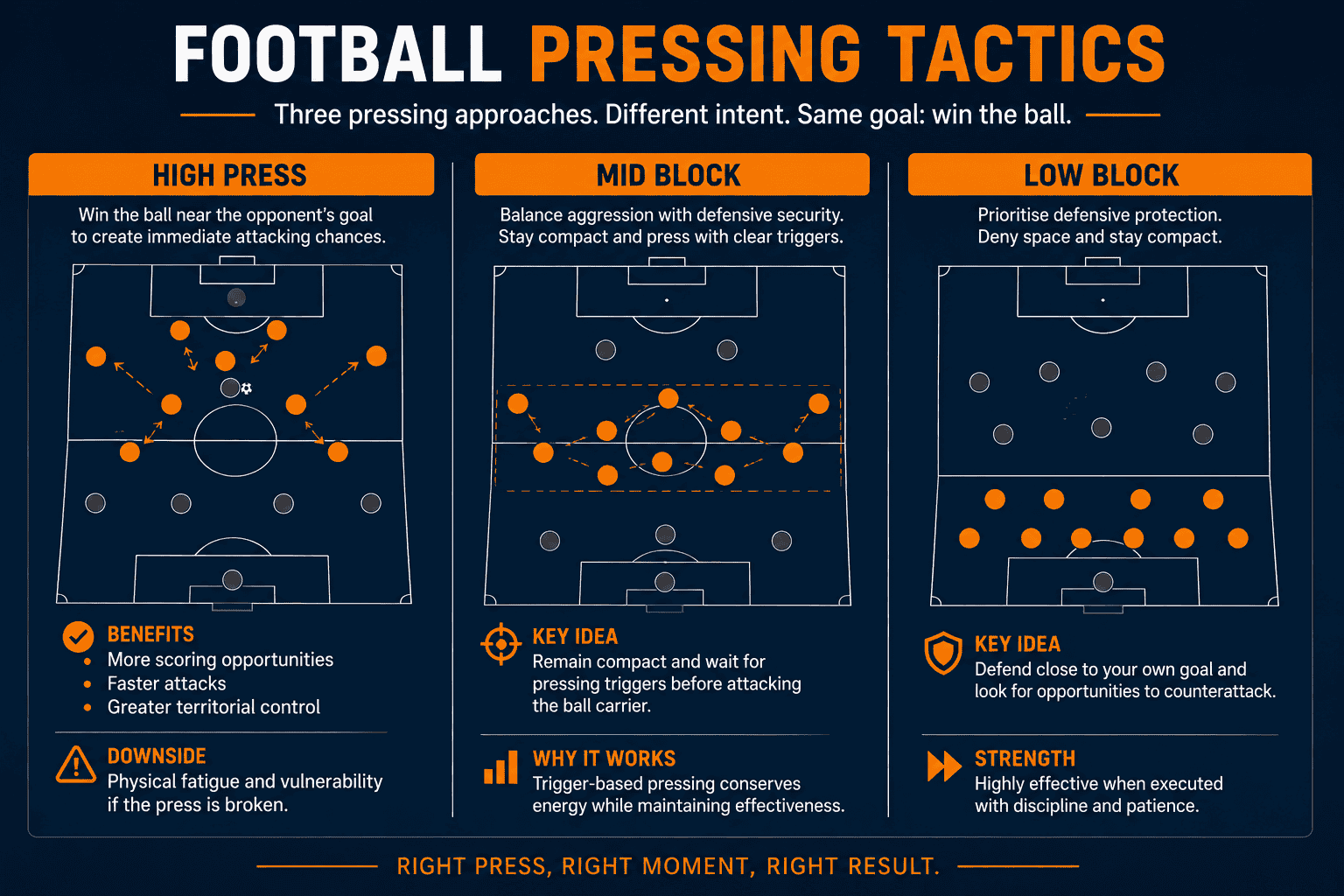
Successful pressing is not simply running toward the ball. It requires coordination, timing, and clear tactical triggers.
High Press
A high press attempts to win possession close to the opponent's goal.
Benefits include:
More scoring opportunities
Faster attacks
Greater territorial control
The downside is physical fatigue and vulnerability if the press is broken.
Mid Block
The mid block balances aggression with defensive security.
Teams remain compact and wait for pressing triggers before attacking the ball carrier. Recent tactical analysis suggests that trigger-based pressing is becoming increasingly common because it conserves energy while maintaining effectiveness.
Low Block
A low block prioritises defensive protection.
Teams defend close to their own goal and look for opportunities to counterattack. Although sometimes criticised as defensive football, the low block remains highly effective when executed correctly.
Football Set Piece Tactics
Set pieces have become one of football's most important tactical battlegrounds.
Recent tactical studies and Premier League analysis highlight the growing influence of specialised set-piece coaching. Goals from corners, throw-ins, and free kicks are contributing an increasing percentage of total goals scored.
Modern set-piece tactics include:
Screen movements
Blocking patterns
Near-post routines
Crowd-and-attack strategies
Short-corner variations
For grassroots teams, investing time in set-piece organisation often delivers a faster return than complex attacking systems.
Football Tactical Training
Understanding tactics is useless if players cannot execute them.
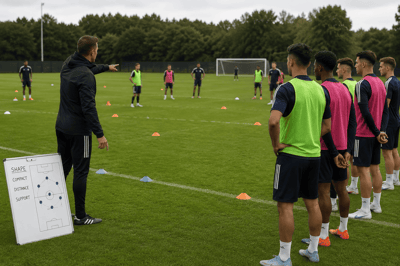
Effective football tactical training focuses on helping players recognise situations and make decisions under pressure.
Training sessions should include:
Position-specific exercises
Small-sided games
Transition drills
Tactical walkthroughs
Match simulations
The goal is not to memorise movements but to develop tactical understanding.
Training Tactical Awareness
Players learn tactics best through realistic game situations.
Instead of isolated drills, coaches should create environments where players must read the game, identify space, and solve problems independently.
When players understand the "why" behind tactical decisions, performance improves dramatically.
Best Football Tactics of All Time
Some tactical systems have changed football forever.
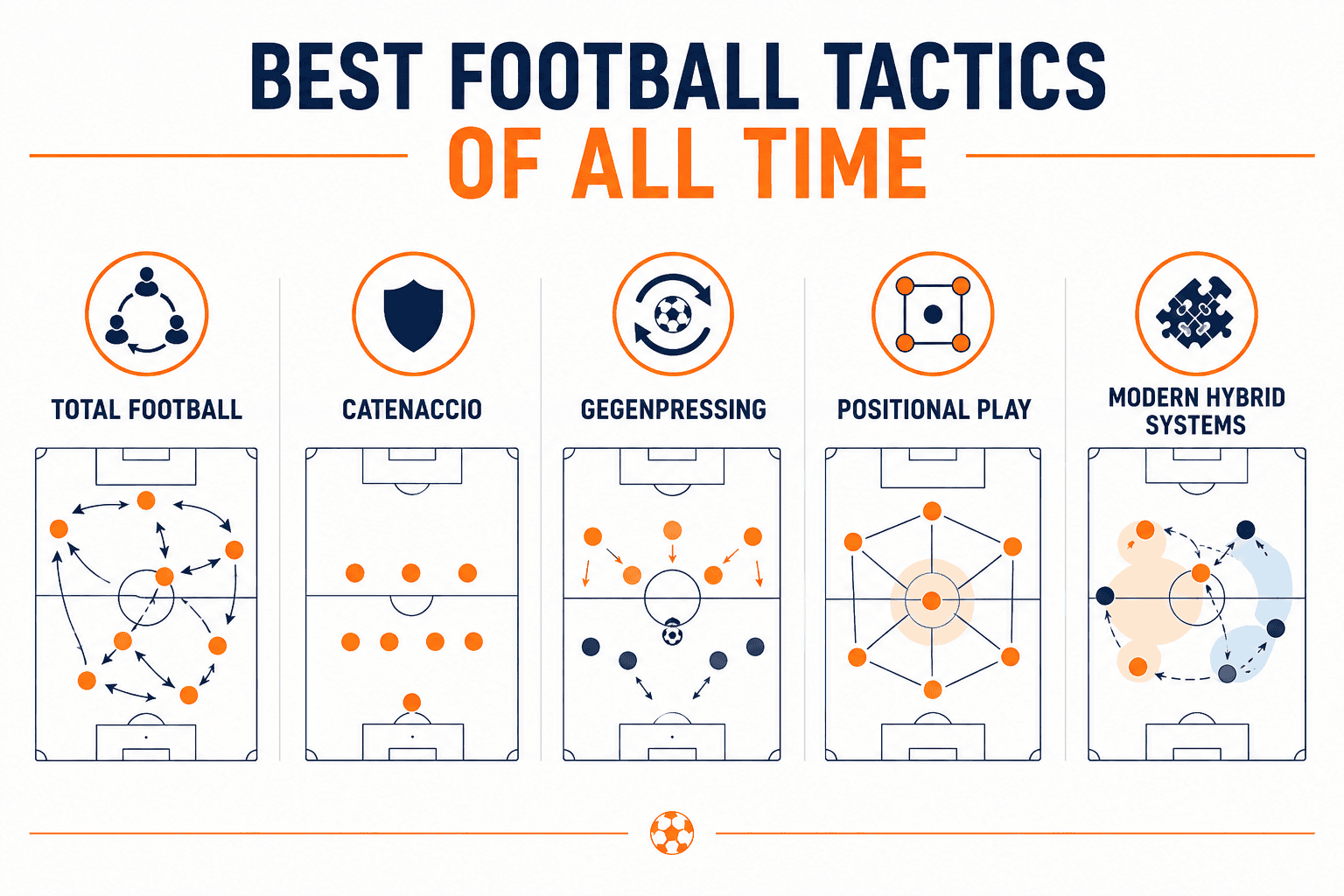
Total Football
Developed by the Dutch, Total Football emphasised positional interchange and fluid movement.
Catenaccio
Italian teams perfected this defensive system, prioritising organisation and defensive discipline.
Gegenpressing
Popularised by Jürgen Klopp, Gegenpressing focuses on immediately winning the ball back after losing possession.
Positional Play
Associated with Guardiola, positional play emphasises spatial control and structured possession.
Modern Hybrid Systems
Today's best teams combine elements from multiple tactical philosophies. Analysts increasingly describe football as entering an era of tactical diversity rather than domination by a single approach.
Choosing the Best Football Tactic for Your Team
There is no universal best football tactic.
The right tactical system depends on:
Player profiles
Technical ability
Physical characteristics
Opponent strengths
Competition level
A grassroots youth team may benefit from a simple 4-4-2 structure. A possession-based academy team might thrive with a 4-3-3. A physically dominant squad could maximise its strengths using a 3-5-2.
The smartest coaches adapt tactics to players rather than forcing players into unsuitable systems.
Football tactics should always serve the team—not the coach's ego.
Conclusion
Football tactics continue to evolve, but the fundamental principles remain unchanged. Successful teams create space, control transitions, defend collectively, and attack with purpose. Whether you're using a 4-3-3, 4-2-3-1, 3-5-2, or 4-4-2, the objective is the same: maximise your strengths while limiting your weaknesses.
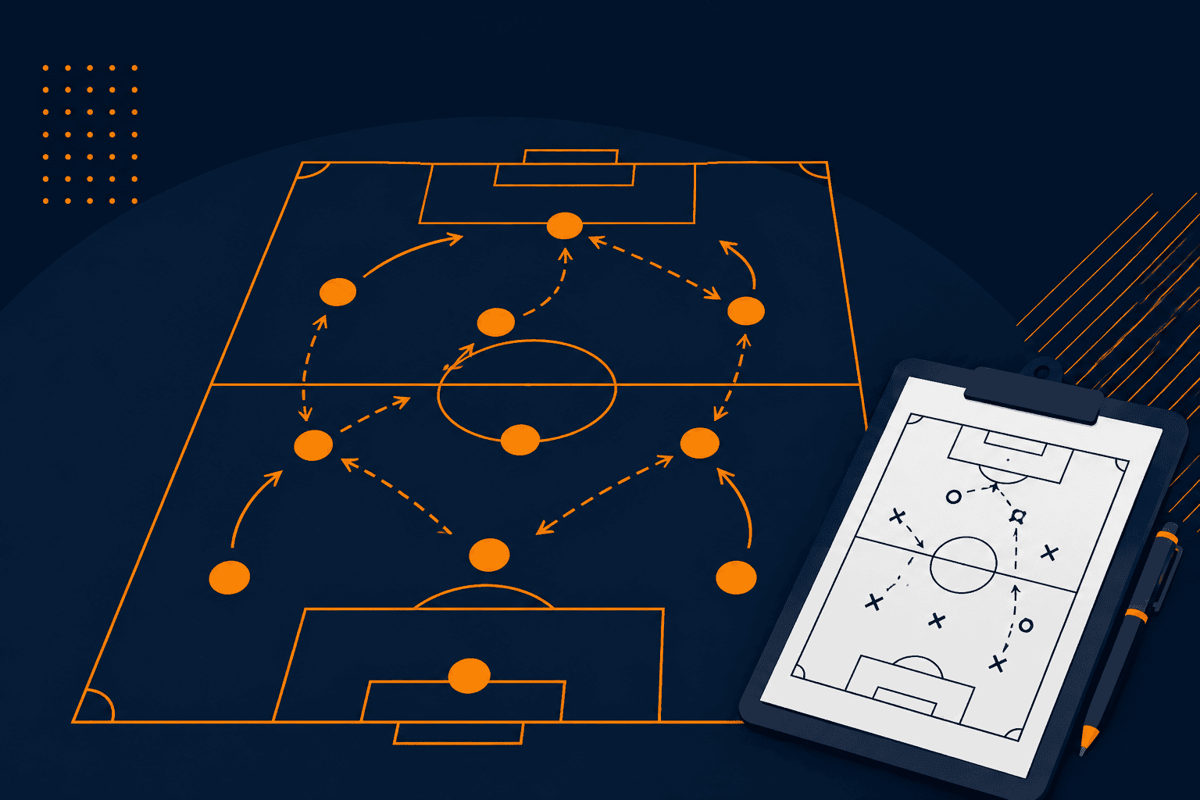
The best coaches understand that tactics are not fixed diagrams on a football tactics board. They are living systems that adapt to players, opponents, and match situations. By mastering formations, pressing structures, set pieces, and tactical training methods, coaches can build teams that are organised, intelligent, and difficult to beat.
FAQs
1. What is the best football tactic for youth teams?
The 4-4-2 and 4-3-3 are often recommended because they teach positional discipline while remaining relatively easy for young players to understand.
2. What is the most popular football formation today?
The 4-3-3 and 4-2-3-1 remain among the most widely used formations across Europe's top leagues.
3. What is a football tactics board used for?
A football tactics board helps coaches visually explain formations, movements, pressing triggers, and set-piece routines during training and matches.
4. How important are set pieces in modern football?
Set pieces have become increasingly important, with elite clubs dedicating specialist coaches and significant training time to corner kicks, free kicks, and throw-ins.
5. How can coaches improve football tactical training?
Use realistic game scenarios, small-sided games, tactical walkthroughs, and video analysis to help players understand decision-making rather than memorising movements.